
Mother's Day Jewelry: Personalized Gifts She'll Wear Every Day
Two thousand years before the modern holiday existed, the Romans observed the Matronalia on the first of March — a festival honoring Juno Lucina, goddess of childbirth, during which families exchanged gifts to honor the women who had protected and sustained them. As Ovid records in his Fasti, the occasion was marked by celebration and offerings — gifts that said: what you have given this household matters. The impulse has not changed.
The jewelry gifts that actually hold up after Mother's Day are the ones she reaches for weeks later without thinking — pieces that fit her life, carry some meaning, and feel like they were chosen for her specifically rather than purchased for the occasion. This guide is built around that standard. Not trends, but categories with staying power: birthstones tied to identity, protective symbols with deep roots, celestial pieces with quiet sentimental weight, and rings she can build on over years. Whether you're shopping for a spouse, a mother, a grandmother, or treating yourself, here's what to look for and why it matters.

Birthstone and Zodiac — Her Sign, Her Stone
Birthstones are the oldest form of personalized jewelry. The practice of assigning gemstones to individuals based on birth month and celestial sign runs through ancient Babylonian, Egyptian, and Roman systems before it was formally standardized in 1912 by the American National Retail Jewelers Association — a history the Gemological Institute of America traces across multiple frameworks over centuries. What kept the tradition alive through all of them is the same thing that makes it work as a gift: a stone chosen for who someone is, not just what they might like.
For Mother's Day, birthstone jewelry divides into two distinct approaches, and the difference matters when you're choosing.
Stones that represent her children. One stone per child's birth month or zodiac sign. This is the family-portrait approach — the piece carries everyone she loves in miniature. It works best when the stones are set together in a single necklace or ring rather than spread across multiple pieces.
A second route that has been gaining traction: instead of one combined piece, give each child their own solitaire on a separate chain, then layer them. Our Birthstone Edit is built for this — twelve bezel-set solitaires in 14K gold, one per month, with the matching Birthstone Stud Earrings available for ears as well. A mother with two children layers two pendants at different chain lengths; a mother with three layers three. The stack grows with the family rather than being committed at the start.
The same logic now extends to rings. The Birthstone Ring Edit carries all twelve months as slim solid 14K gold bands designed to stack — one ring per child's birth month, added over the years. A mother of two stacks two rings on one finger; a mother of four stacks four. The February Birthstone Ring with Amethyst, the May Birthstone Ring with Emerald, the July Birthstone Ring with Ruby — each piece is the matching ring version of the same birthstone in the necklace and stud collections, so a mother can build a coordinated three-piece set in her child's stone over time.


Her own stone. Her zodiac sign, her birth month, her character. This approach resonates more deeply with women who have a strong sense of identity beyond their role as a mother — and frankly, that's most of them. A piece that says you, not just your family, often means more than one that represents everyone else.
For that approach in its simplest form, the Birthstone Edit solitaires give the stone its own moment — just her birth month, set in 14K gold, no constellation or symbol attached. Her stone, her piece, her decision about what it means.
The zodiac route takes the birthstone concept further than a simple month assignment. Each sign carries a stone chosen for its associated qualities: the blue-green clarity of aquamarine for Cancer — depth, care that doesn't deplete itself. The Cancer Zodiac Disc Necklace with Natural Aquamarine in 14K Gold renders the sign's glyph alongside the natural stone in a 14K gold disc — personal, wearable every day, and nothing like the generic pendant options that crowd the Mother's Day market. For warm-toned preferences, the Leo Zodiac Disc Necklace with Natural Citrine in 14K Gold pairs golden citrine — historically associated with warmth and vitality — with 14K gold in a composition that photographs well and holds up to daily wear.


What to look for
Natural stones are the right choice for a piece meant to be worn and kept. As the GIA's aquamarine reference notes, natural stones show slight color variation and occasional inclusions — marks of geological authenticity, not imperfection. Lab-created stones are optically flawless but carry none of the individual character that makes a natural stone specific to its origin. For the metal, 14K gold (stamped 585, meaning 58.5% pure gold) is the right specification for everyday jewelry: hard enough to hold its shape, pure enough to resist tarnishing with normal care.
Protective Symbols — Giving Back What She's Always Given
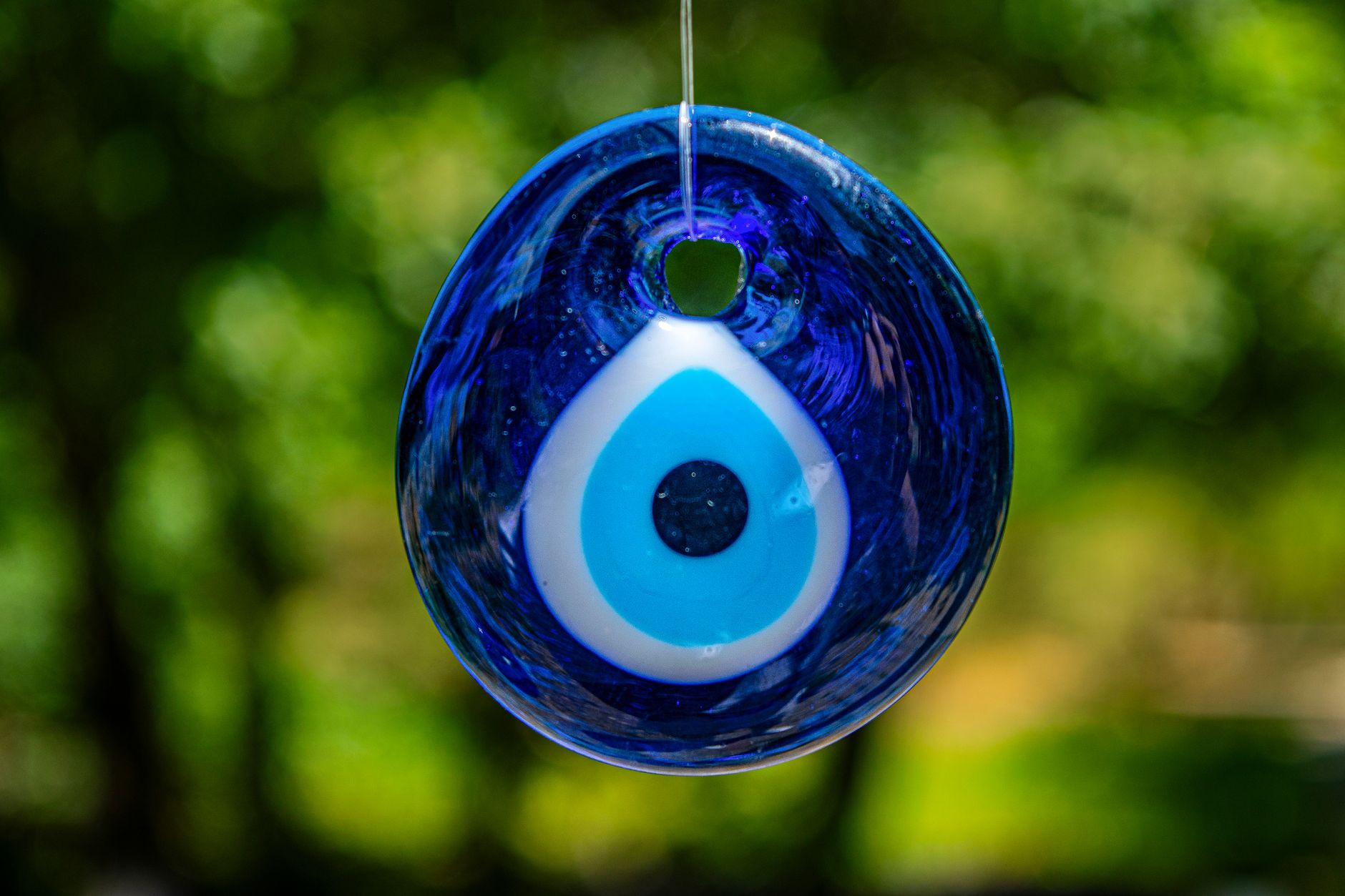
There is a specific kind of emotional logic to giving a protective symbol to someone who has spent years protecting everyone around her. The evil eye, the hamsa, the Eye of Horus — these are objects made to be given, historically exchanged between people who wanted to keep each other safe. When that exchange runs in the direction of a mother, something shifts: protection returned, the usual dynamic inverted. It's one of the more emotionally complete statements available in jewelry form, and one most gift-givers haven't considered.
The evil eye — the nazar — is among the oldest documented protective symbols in history, with a continuous tradition spanning ancient Mesopotamia through the contemporary Mediterranean, Middle East, and South Asia. Wearing an evil eye, or giving one, carries a specific meaning: I am keeping watch over you. The deflection of harmful envy, the warding of ill will directed at someone — for a person who has absorbed those forces on behalf of a family for years, being watched over in return carries real weight. The Sterling Silver Evil Eye Heart Necklace combines the protective eye with a heart at its center — the watchfulness of the symbol and the warmth of the occasion in a single piece.

The Eye of Horus reaches further back — to ancient Egypt, where the Wedjat eye was worn as a protective amulet representing healing, wholeness, and the restoration of what has been broken. The British Museum's Papyrus of Ani (c. 1250 BCE) records the eye's symbolic components in precise detail, showing how carefully the ancient Egyptians encoded meaning into protective objects meant to be carried and worn. The Sterling Silver Eye of Horus Necklace draws from that lineage directly — visually richer and historically older than the geometric evil eye, better suited to someone drawn to Egyptian iconography specifically. For the full history of either symbol, our guide to 5,000 years of the evil eye as a talisman covers both in depth.

How to choose a protective piece for gifting
The evil eye reads best at 12–18mm — any smaller and the symbol loses legibility; any larger and it shifts from everyday jewelry to statement piece. Sterling silver suits both symbols for daily wear and holds up well with normal use. The heart format works when you want the protective meaning to feel warm rather than esoteric. Browse the full Protective Talismans collection for the complete range of protective pieces.

Celestial Jewelry — Something She'll Wear Every Day
Stars and moons have appeared in jewelry since the Bronze Age. What keeps them relevant across every decade and fashion cycle is that they belong to no particular tradition — celestial motifs appear in the Metropolitan Museum's ancient Near Eastern collection dating to around 3,000 BCE, worn across cultures that otherwise shared little in common. That breadth is precisely what makes celestial jewelry work as a gift: it reads as personal and meaningful without requiring the wearer to belong to any particular worldview. It's appropriate at 30 and at 70, with a blazer and with a sweater.
For Mother's Day, celestial pieces carry a quiet sentimental layer that doesn't need to be named on the gift card. Stars as navigation — the fixed point above the noise, the thing you find when you're lost. Moon phases as the full cycle of seasons and change, the waxing and waning that anyone who has watched children grow through every stage understands without explanation. These resonances work without being spelled out.
The Diamond Star Necklace with Ethiopian Opal in 14K Gold brings the celestial motif together with the vivid play-of-color that makes Ethiopian opal one of the most visually distinctive stones in fine jewelry — each stone shows a different internal pattern of light, so no two pieces look identical. For a composition that holds both primary celestial symbols in a single piece, the Moon & Star Necklace with Natural Multi-Gemstones sets moon and star together with natural stones in varying colors — considered, personal, and built for the kind of daily wear that makes a gift worth giving.


Layering celestial pieces
Celestial jewelry layers naturally because it speaks a consistent visual language across different scales. A star pendant at 16 inches, a longer chain at 18–20 inches, a star ring or moon stud at the ear — same vocabulary, different scale, no conflict. This makes a first celestial piece easy to add to rather than replace, which means a gift given today becomes the anchor for a collection that grows over years.

Rings She Can Build On
A stackable ring works as a Mother's Day gift because it carries an obvious logic forward in time. One ring that means something now, with the understood intention that the stack will grow — a new piece for each milestone, each year, each addition to the family. The first ring is a starting point; the stack becomes a record of years worth marking.
Symbolic rings anchor a stack better than plain bands because they have something to say as a standalone. The Moon Phase Ring in Sterling Silver with Natural Diamonds renders the full lunar cycle across the band, set with natural diamonds — complete as a single ring, and a strong visual anchor for everything added alongside it over time. The Diamond Moon Phase Ring in 14K Gold is the same concept in warm metal, for a stack built in gold.
For mothers who want the stack to mean something specific from the start, the Birthstone Ring Edit is the personalized version of the same idea — each ring set with the natural birthstone of a person the wearer loves. A mother of a March baby starts with the March Birthstone Ring with Aquamarine; the September Birthstone Ring with Sapphire comes next for a September child; the January Birthstone Ring with Garnet is added later for a January grandchild. Each ring is a slim band, so two or three stack cleanly on one finger.


Building a stack without overthinking it
Start with the symbol ring — the one that carries meaning and works alone. Add a plain band in the same metal for visual breathing room. Add a diamond band when you want to mark a specific milestone: a birthday, a new child, a year worth commemorating. The best stacks look like they grew naturally over time, because they did.
How to Choose When You Don't Know Her Style
Most jewelry gift uncertainty comes from the same place: not knowing what she already owns, what metal she prefers, what scale suits her. A few principles close that gap.
Read what she already wears. Look at her necklaces specifically, not her rings — necklace preferences are more consistent. If she wears yellow gold necklaces, give gold. If she wears predominantly silver, give silver. If she genuinely mixes, 14K yellow gold is the safer default for an everyday gift piece.
Scale matters more than most people realize. A 14mm disc necklace reads as refined and understated; a 25mm pendant makes a statement. If you're uncertain, go smaller — a delicate piece has more longevity than an overwhelming one.
Apply the everyday test. Can you picture her wearing it to work, to pick up the kids, to a casual dinner? If not, reconsider. The best jewelry gifts are the ones that become part of daily life rather than spending years in the box they came in.
Personalized over generic, every time. A zodiac disc or birthstone piece chosen for her specifically will outlast a more expensive generic pendant. The meaning is built into the design.
For new moms: lighter and shorter pieces work best in the first years — stud earrings, necklaces at 16 inches, delicate rings. The collection can grow as the child does; the first piece just needs to be something she can actually wear right now.
Frequently Asked Questions
What is the most popular Mother's Day jewelry gift?
Birthstone necklaces are consistently the top-selling jewelry category for Mother's Day, followed by personalized pieces and earrings. The GIA's birthstone resource reflects how enduring the connection between gemstones and personal identity has been — birthstones rank among the most searched jewelry terms annually, peaking in the weeks before major gift occasions. Pieces that represent family — one stone per child, or a zodiac piece for the wearer herself — tend to hold their meaning longer than non-personalized alternatives.
What birthstone represents a mother?
There is no single "mother's birthstone" — the tradition is either to represent her children through their birth month stones, or to represent her own identity through her zodiac sign and corresponding stone. Both are valid and carry different emotional weight. The Smithsonian's history of birthstones traces the practice through ancient Babylonian, Egyptian, and later European systems — all of them building on the same core idea: that a specific stone can carry the quality and character of a specific person.
If you want a single stone that represents her without resorting to "mother" as a category, her own birth month in our Birthstone Edit is almost always the better answer than a generic motherhood pendant.
What does it mean to give someone an evil eye or hamsa for Mother's Day?
It means giving back what she has always given. The evil eye deflects harmful envy directed at the wearer; the hamsa is an ancient symbol of protection and good fortune that appears across Mediterranean, Middle Eastern, and North African traditions. Giving either to someone who has spent years being the protective force in your life inverts the usual direction — protection returned. It's a meaning no generic pendant can replicate, and one that tends to stay with the person who receives it.
Is it okay for a mother to buy herself jewelry for Mother's Day?
Completely fine, and increasingly common. Many women use the occasion to mark something for themselves — a milestone, a new chapter, a piece they've wanted for a long time. The meaning of a piece doesn't depend on who purchased it. Self-gifting on Mother's Day is a legitimate tradition in its own right.
What jewelry is good for a new mom?
Lighter and shorter pieces work best in the early years — stud earrings, necklaces at 16 inches, delicate rings that won't catch. A zodiac disc necklace, either the mother's own sign or the baby's, is a strong first piece: personal, wearable, and practical enough for daily use. The collection can grow naturally as life settles; the first piece just needs to be something she can reach for without thinking.
Gold or silver — which is better for a Mother's Day gift?
Look at what she already wears. If her necklaces are yellow gold, give gold. If they're silver, give silver. If she mixes both, 14K yellow gold is the safer default for a gift piece — it holds its finish without regular polishing, reads warmly against most skin tones, and pairs easily with other metals. Sterling silver (925) is the right choice if she has a cooler aesthetic or her jewelry box runs predominantly silver. Either metal at proper quality will hold up to years of daily wear without issue.
The right Mother's Day gift doesn't need a speech to work. It becomes part of how she moves through her days — something she reaches for on a Tuesday morning because it fits, because it carries meaning, because someone chose it for her specifically. Browse the Protective Talismans and Celestial Signatures collections for pieces built around that intention.


