
Colorful Gemstone Jewelry: How to Choose the Right Natural Stone
Walk into any jewelry shop right now and something has shifted. The cases that were once dominated by the quiet glint of diamonds and plain gold are full of color — deep cobalt sapphires, vivid green emeralds, warm amber citrines, the electric flicker of fire opals. If you’ve been feeling the pull toward a piece with a real stone in it, you’re not alone, and the timing makes sense. Colored gemstone jewelry is having a genuine moment, driven by something more lasting than trend cycles: the recognition that a colored stone makes a statement a diamond solitaire never quite does.
A diamond is universally legible — beautiful, timeless, and deliberately neutral. When you choose an aquamarine, you’ve chosen something specific: a particular quality of sea-blue that puts a color in the conversation before you say a word. That specificity is exactly what appeals to people right now. Natural colored gemstones are the most personal category in jewelry. They reward attention and carry character that manufactured materials simply don’t replicate.
This guide covers what actually matters when you’re choosing a natural colored gemstone piece: the quality factors that separate a memorable stone from a forgettable one, how to read the color spectrum and find what works for you, what the labels on colored stones actually mean, and how to buy and wear one well.

What Makes a Natural Colored Stone Worth Wearing
Color is the dominant value factor in any colored gemstone — far more than cut, carat, or clarity. According to GIA’s research on colored gemstone value factors, color accounts for roughly 60% of a colored stone’s assessed quality. That figure matters practically: it means a well-colored stone in a modest size will outperform a larger stone with weak or uneven color every time.
GIA breaks gemstone color into three dimensions: hue (the color family — blue, green, red, purple), saturation (the intensity and richness of that color), and tone (how light or dark the stone reads). A fourth factor, uniformity, describes how evenly the color distributes across the stone. The best colored stones tend toward medium-to-medium-dark tone with strong, even saturation. Overly dark stones look muddy; overly light stones look pale and forgettable. What you want is a stone that holds its color across different lighting — looks as rich in an office as it does outside.
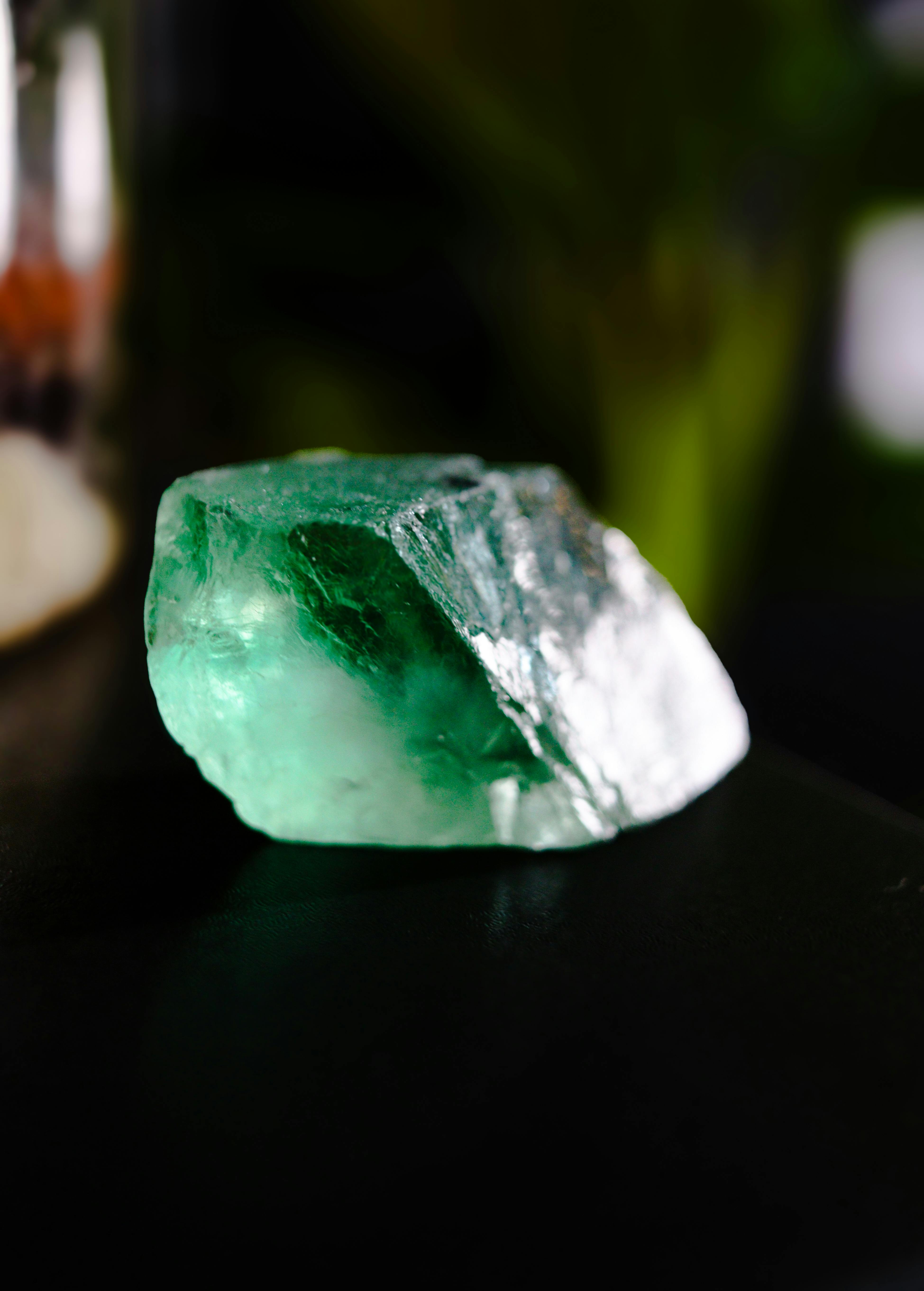
Natural character is part of what makes these stones interesting to wear. A natural emerald will almost always have inclusions — the trade calls them jardin, French for garden — because emerald formation at geological pressure produces those internal features. Those marks are part of what certifies a stone as real. A completely flawless, heavily saturated emerald at a low price point is a red flag, not a bargain.
If you already know which stone you want and would rather start with the gem itself than a zodiac sign, the Birthstone Edit organizes our natural-stone solitaires by the modern monthly tradition — one stone per month, each set in 14K gold, with a matching pair in the Birthstone Stud Earrings collection. The rest of this guide walks the color spectrum and points to specific pieces along the way.
The Aries Zodiac Disc Necklace with Natural Emerald in 14K Gold uses a natural emerald set flush into a solid gold disc — the bezel-style mounting holds the stone securely while the gold frame gives the color room to read. The result is a piece where the stone and the setting are in conversation rather than competition.

The Color Spectrum: Finding Your Stone
Blues and greens: cool, clear, and wearable every day
Blue and green stones are the most consistently popular in fine jewelry, and for good reason: they complement nearly every skin tone, pair well with both yellow and white gold, and hold their appeal across decades. Within this family, the range of options is broader than most people realize.
Aquamarine — the blue variety of beryl, the same mineral family as emerald — offers a soft, clear blue that sits closer to the sky than the sea. It reads lighter and more transparent than sapphire, which makes it particularly effective in pieces where you want color without visual weight. The Cancer Zodiac Disc Necklace with Natural Aquamarine in 14K Gold captures this quality precisely: the stone’s natural translucency gives the disc a quiet luminosity that photographs exceptionally well.
If you want aquamarine in its simplest form, the Aquamarine Birthstone Necklace in 14K Gold sets a single natural aquamarine in a bezel on a delicate chain — no constellation, just the stone. Matching Aquamarine Birthstone Stud Earrings in 14K Gold finish the set for daily wear. On the hand, the March Birthstone Ring with Aquamarine in 14K Gold sets the same natural stone in a slim solid 14K gold band — durable enough for daily wear at Mohs 7.5 to 8.


Blue sapphire, at the other end of the blue spectrum, is denser and more commanding — a stone that anchors a look rather than softening it. The Capricorn Zodiac Disc Necklace with Natural Blue Sapphire in 14K Gold brings the full weight of that color into a disc format that keeps the presentation clean without diminishing the stone.
For the same blue without the zodiac framing, the Sapphire Birthstone Necklace in 14K Gold sets a single natural blue sapphire as a clean bezel solitaire — September's birthstone and one of the most durable colored stones you can wear daily (Mohs 9, second only to diamond). The matching Sapphire Birthstone Stud Earrings in 14K Gold make the set.


Warm tones: yellows, oranges, and deep reds
Citrine is the most accessible entry point in this family: a warm golden-yellow quartz with Mohs hardness of 7, durable enough for daily wear and bright enough to hold attention at a distance. The Leo Zodiac Disc Necklace with Natural Citrine in 14K Gold is a particularly strong warm-tone pairing — the stone’s golden hue and the 14K yellow gold frame reinforce each other rather than competing.
Citrine is also November's monthly birthstone, and the Citrine Birthstone Necklace in 14K Gold presents it as a single bezel-set solitaire for buyers who want the warmth without the lion. The matching Citrine Birthstone Stud Earrings in 14K Gold add a pair of small warm-light points to the ears. The November Birthstone Ring with Citrine in 14K Gold completes the warm-tone three-piece set, in a slim stackable band that holds the gold-on-gold pairing tonally rather than as contrast.


Mexican fire opal is more unusual: a translucent to semi-transparent orange stone from the Querétaro region of Mexico, known for its internal fire and depth of color. It sits at Mohs 5.5–6.5 — softer than most other gemstones in this category — which makes a protective setting format like the bezel-set Taurus Zodiac Disc Necklace with Natural Mexican Fire Opal in 14K Gold the right choice. The disc cradles the stone rather than exposing it to impact.

Spessartite garnet runs from vivid orange to deep orange-red, with a refractive index high enough to give the stone real brilliance. The Virgo Zodiac Disc Necklace with Natural Spessartite Garnet in 14K Gold puts this orange intensity into a format that lets the color speak without requiring a dramatic setting to justify it.

Purple and violet: the stone with historical weight
Amethyst was, for most of recorded history, considered as precious as ruby and emerald. Its purple color — produced by iron impurities and natural irradiation in quartz crystal — was associated with clarity of thought across cultures from ancient Rome to medieval Europe. Major deposits discovered in Brazil in the 19th century made it widely available, but that availability hasn’t dimmed the color’s appeal. A well-saturated natural amethyst in medium-dark tone, set in gold, is still one of the most quietly striking pieces you can wear. The Sagittarius Zodiac Disc Pendant with Natural Amethyst in 14K Gold gives the stone its proper weight in a format designed for everyday wearing.
The Amethyst Birthstone Necklace in 14K Gold sets the same purple quartz as a calendar-month solitaire — February's birthstone, in the simplest possible format. Matching Amethyst Birthstone Stud Earrings in 14K Gold pair for a coordinated set, and the deep purple holds its color well against both yellow and rose gold. The February Birthstone Ring with Amethyst in 14K Gold sets the same natural amethyst on the hand — designed to stack with other birthstone rings or to wear alone.


Multi-stone and opal: when one color isn’t enough
Reds and pinks: warmth with weight
Red stones carry the longest history in jewelry of any color family — ruby and red garnet appear in ornaments going back to the third millennium BCE, valued for the way the color reads as both warmth and authority in a single tone. Modern catalogs split this family into three useful categories: ruby (the corundum red, the most prestigious), garnet (the affordable workhorse with surprising fire), and pink tourmaline (the softer, more contemporary cousin).
Ruby is corundum, Mohs 9 — the same mineral as sapphire, differently colored by chromium instead of iron and titanium. It's the most durable red stone you can wear and the only one whose color has been continuously prized for over four thousand years. The Ruby Birthstone Necklace in 14K Gold presents a single natural ruby in a bezel-set solitaire as July's monthly birthstone. Matching Ruby Birthstone Stud Earrings in 14K Gold finish the pair. The July Birthstone Ring with Ruby in 14K Gold sets a single natural ruby in a slim 14K gold band — Mohs 9 hardness makes it the most ring-suitable of the three reds described in this section.


Garnet covers a broader color range than most people realize — the pyrope-almandine variety in the Garnet Birthstone Necklace in 14K Gold tends toward deep red with a hint of brown warmth, the traditional color associated with January. Mohs 6.5 to 7.5 makes it durable enough for daily wear, and its refractive index (1.74–1.89) gives it more visible fire than most red stones at its price point. The matching Garnet Birthstone Stud Earrings in 14K Gold are sized small enough to layer with other studs without overwhelming. The January Birthstone Ring with Garnet in 14K Gold presents the same deep red on the hand — Mohs 6.5 to 7.5, durable enough for daily wear and pairing well with both the matching necklace and the matching studs as a coordinated set.


Pink tourmaline is the most modern of the three — not because it's newly discovered, but because its use in fine jewelry only became widespread in the 20th century, after major Brazilian and Californian deposits opened. The Pink Tourmaline Birthstone Necklace in 14K Gold is October's monthly birthstone in its simplest form. The color sits somewhere between blush and watermelon depending on the specific stone, and pairs particularly well with rose gold. Matching Pink Tourmaline Birthstone Stud Earrings in 14K Gold complete the pair. The October Birthstone Ring with Pink Tourmaline in 14K Gold is the ring-format October option — used in place of the traditional October birthstone (opal) because pink tourmaline's Mohs 7 to 7.5 handles daily ring wear far better than opal's Mohs 5.5 to 6.5.


Multi-stone and opal: when one color isn’t enough
Ethiopian opal is in a category of its own. Unlike gemstones with a single fixed color, opal displays play-of-color: flashes of spectral light that shift as the stone moves. The Diamond Star Necklace with Ethiopian Opal in 14K Gold pairs this spectral quality with a diamond-accented star setting — a piece that carries all the color families simultaneously without committing to one. The Moon & Star Necklace with Natural Multi-Gemstones takes a different approach to plurality: multiple distinct stones in a single setting, each visible and identifiable, giving you a piece that shifts in character depending on which stone the light finds.


Natural, Lab-Grown, and Treated: What the Label Actually Means
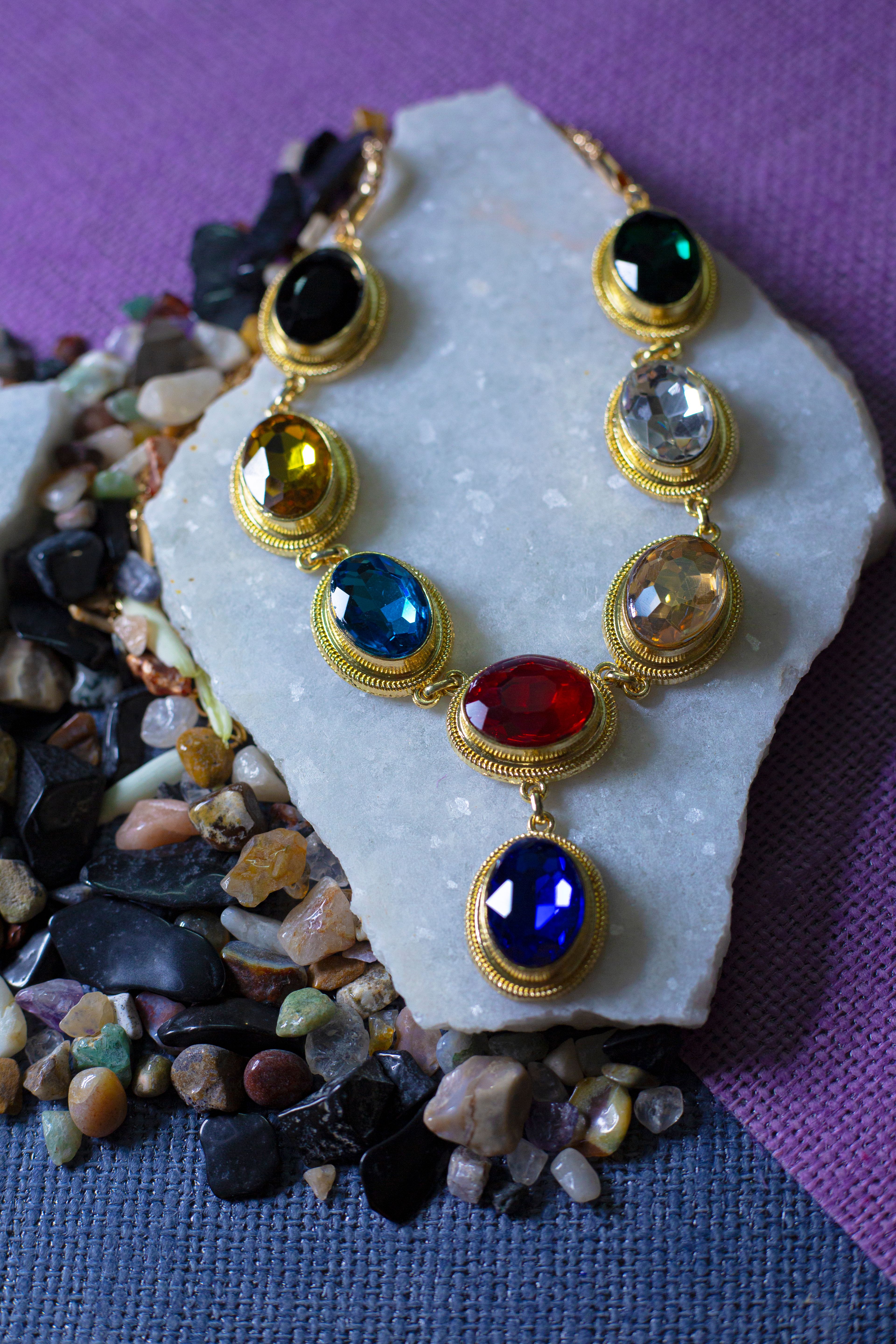
The language around colored stones can be confusing if you haven’t encountered it before. These three terms appear on certificates, in product descriptions, and in conversations with jewelers — and they refer to meaningfully different things.
Natural means the stone was formed in the earth through geological processes, over millions of years, without human involvement in its creation. Natural stones carry provenance: they come from specific mining regions — Colombian emeralds, Burmese sapphires, Mexican fire opals — and those origins are part of their identity and value. As GIA notes in its analysis of factors affecting colored stone value, geographic origin can influence a stone’s assessed worth by up to 15%, because certain origins carry historical associations with exceptional quality.
Lab-grown (or synthetic) means the stone is chemically identical to a natural stone but was created in weeks rather than millions of years. Lab-grown stones have the same physical and optical properties but lack rarity, provenance, and geological character — which is why they retail at a significant discount.
Treated is where the conversation gets more nuanced. The large majority of colored stones on the market have undergone some form of treatment — heat treatment to improve color, oiling to reduce the visibility of inclusions in emerald, fracture filling. Industry practice considers certain treatments standard and acceptable; others are more controversial. What matters for the buyer is disclosure: reputable jewelers disclose treatments, and GIA certificates identify them. AuAlchemy’s zodiac disc collection uses natural stones, disclosed as such. That’s the baseline to hold any jeweler to.
How to Choose a Colored Gemstone Piece
Durability and daily wear
Hardness matters more in colored stones than most buyers realize. The Mohs scale runs from 1 to 10; diamonds are 10 and require no special care for daily wear. Most colored stones used in fine jewelry fall between 6.5 and 9, but the lower end of that range requires attention to setting design. Emerald (7.5–8), aquamarine (7.5–8), and sapphire (9) are robust for rings and daily-wear necklaces. Amethyst and citrine (both Mohs 7) are durable but benefit from avoiding hard knocks. Opal and fire opal (5.5–6.5) need a protective setting — a bezel format that wraps the stone’s perimeter rather than exposing it on prongs is the right choice for these softer stones.
Setting design and stone protection
The bezel-set disc format — where the stone sits flush in a gold frame with the metal wrapping its circumference — is one of the most practical designs for colored gemstones. It protects the stone’s girdle from chipping, keeps the stone secure without tension-set stress, and presents the color in a clean frame that doesn’t fragment the visual. For necklaces worn daily, this format wears better over years than exposed-prong settings that can catch fabric or bend out of alignment. The same bezel format extends to rings: the Birthstone Ring Edit carries all twelve months as slim 14K gold bezel-set bands, the ring version of the same protective setting philosophy described here. The February Amethyst Ring, the August Peridot Ring, and the November Citrine Ring each set a single natural stone in a bezel that wraps the girdle — durable enough for daily wear on the hand even for the softer stones in the collection.


Metal choice and color pairing
Yellow gold amplifies warm-spectrum stones — citrine, spessartite garnet, fire opal — by echo, reinforcing the color’s temperature. It also works well with purple (amethyst against yellow gold is a historically proven combination) and with warm-toned greens like peridot. Cool-spectrum stones — aquamarine, blue sapphire — read equally well in yellow or white gold, but yellow gold tends to warm them slightly, while white gold keeps them crisp and clear. All of the AuAlchemy zodiac disc necklaces are available in 14K solid yellow gold, which means the stone is always paired with a warm frame that holds up over decades of daily wear.
Scale
Zodiac disc necklaces in the 14K gold format land at a scale that’s large enough to show the stone’s color clearly at conversational distance but compact enough to wear with a wide range of necklines. A stone that reads as a color point rather than a full disc tends to disappear; one that’s too large competes with everything else you’re wearing. The disc format solves this by making the gold part of the visual, not just a frame around the stone.
Wearing Colored Gemstone Jewelry
The strongest rule for wearing a colored stone piece is the simplest one: give it space. A saturated natural gemstone in a gold setting is a complete visual statement. It doesn’t need a competing pendant at the same chain length, or a second stone piece fighting for attention. Wear it against a clean neckline or a simple solid top and let the stone do its work. This is especially true for the warmer, more saturated stones — fire opal and spessartite garnet in particular carry enough visual intensity that layering competes rather than complements.
Where colored stones do layer well is with pieces that don’t compete on the color axis. A plain 14K gold chain at a different length — something delicate above or below the stone pendant — adds visual dimension without drawing the eye away from the gem. The Celestial Signatures collection is built around this principle: each zodiac disc necklace is designed to stand alone or anchor a simple stack, with the stone as the organizing principle of the look.
Frequently Asked Questions
What is the most popular colored gemstone in jewelry right now?
Blues and greens are perennially strong, with sapphire, aquamarine, and emerald dominating the conversation in fine jewelry. Warm stones — particularly orange and red garnets, citrine, and fire opal — are gaining significant ground in 2025–2026, driven by high fashion’s move toward bold, saturated color. The American Gem Trade Association’s 2025 predictions also highlight tanzanite, pink tourmaline, and rhodolite garnet as stones gaining momentum.
Do natural gemstones require special care?
It depends on the stone. Sapphire, emerald, and aquamarine (all Mohs 7.5 or above) can be cleaned with warm water and mild soap and stored with other jewelry without unusual concern. Softer stones like opal and fire opal (Mohs 5.5–6.5) should be stored separately to prevent surface scratching, kept away from heat and sudden temperature changes, and wiped with a soft cloth rather than brushed. Amethyst fades with prolonged direct sunlight exposure over years — store it away from a sunny windowsill.
Are lab-grown colored gemstones worth buying?
For purely aesthetic purposes, a lab-grown sapphire or emerald looks identical to a natural stone and will perform identically in wear. What it lacks is rarity and provenance — the geological story that makes natural stones interesting to collectors and that underpins their long-term value. If you’re buying a piece to wear and enjoy, lab-grown is a reasonable choice at a lower price. If you want something that holds meaning over time and has the character of natural formation, natural is worth the premium.
What colored gemstone is best for everyday wear?
Sapphire (Mohs 9) is the most durable colored stone for daily use — it’s the standard recommendation for engagement rings specifically because of this. Aquamarine and emerald (both 7.5–8) are also excellent for daily necklaces and earrings, though emerald in rings benefits from a protective setting. Amethyst and citrine (Mohs 7) are durable enough for necklaces and earrings worn daily with no special precaution. Avoid opal in rings or pieces that will take regular impact.
How do I match a gemstone color to yellow gold?
Yellow gold naturally amplifies warm-spectrum stones — citrine, garnet, fire opal — by reinforcing the color’s warmth. For cool stones like aquamarine and blue sapphire, yellow gold adds a warm contrast that can be striking rather than competing. The combination of deep amethyst purple with yellow gold has a long and proven track record in fine jewelry. The main pairing to approach carefully is pale pink stones with yellow gold, where the warm metal can shift the perceived color of very light rose hues toward orange.
What is the difference between a birthstone and a zodiac stone?
Birthstones are assigned by calendar month (January is garnet, February is amethyst) based on a standardized list. Zodiac stones are tied to astrological sun signs, which span two calendar months, so the assignments don’t align cleanly. AuAlchemy’s zodiac disc collection assigns one natural stone per sign — aquamarine for Cancer, sapphire for Capricorn, emerald for Aries — chosen for visual character and historical association rather than any single canonical list.
Both lists are represented in the catalog: zodiac assignments sit in Celestial Signatures, and the calendar-month birthstones (one solitaire per month) sit in the Birthstone Edit, with matching stud earrings for each.
Can I layer colored stone necklaces?
Yes, with intention. The most effective layered looks with colored stone pieces use the stone pendant as the focal point at one chain length and add only plain metal chains above or below it — not competing stone pieces. If you want two stone pieces together, keep them in related color families (two blues, or blue and green) and at meaningfully different chain lengths so they read as a stack rather than a tangle. Avoid pairing a warm-toned stone with a cool-toned stone at the same length, where the colors will fight for dominance.
The case for a natural colored stone piece is ultimately simple: it commits to something. Where plain metal and diamonds are deliberately open-ended, a well-chosen gemstone in a quality setting says something specific about the person wearing it — a color they chose, from a stone the earth spent millions of years making, set in metal that will outlast the trend that brought it to your attention. That combination of specificity and permanence is exactly what makes these pieces worth wearing for longer than a season.


