
Cancer Zodiac Jewelry Guide: Stones, Symbol, and Style
Cancer wears what it feels. That's the easiest way to describe it — a sign that reads emotional weather like other people read texts. The jewelry that suits Cancer follows the same logic: pieces that mean something specific to the wearer, not flashy declarations.
If you're shopping for a Cancer (or you are one), the choice isn't about the loudest stone. It's about a piece that gets worn every day because it sits at exactly the right weight on the collarbone or the finger — quiet, present, personal. Here's how to pick one.
What Cancer Looks Like in Jewelry
The Cancer glyph (♋) is a sideways rendering of a crab — two curves that mirror each other, often read as two embraced figures or as the crab's claws. On a disc pendant or a delicate necklace, the symbol photographs cleanly: legible at conversation distance, recognizable to anyone who knows the zodiac, subtle to anyone who doesn't.
That ambiguity is the appeal. Cancer pieces don't broadcast — they recognize. Worn under a shirt at work, layered with a chain on a date, or given as a birthday gift to someone who actually shares the sign — the piece does its job in all three contexts.
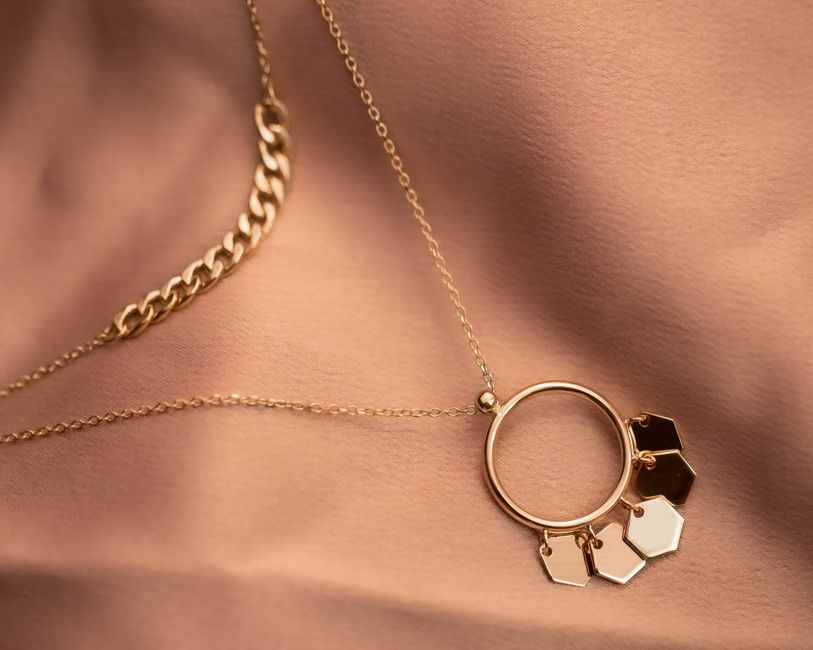
The Cancer Zodiac Disc Necklace with Natural Aquamarine in 14K Gold is the most direct version: a small solid-gold disc with the glyph stamped into the surface and a single aquamarine set into the design. The disc reads as a coin pendant from any distance; the aquamarine catches light only when you're close. The proportions are deliberately small — about the size of a fingertip — so it layers without crowding.

For a less symbol-forward option, the Cancer Zodiac Necklace with Natural Diamond in 14K Gold trades the disc for a clean linear take on the glyph with a diamond accent. It's the piece for someone who likes the meaning but doesn't want to wear a literal medallion.

Cancer's Stones, Decoded
Cancer is one of the zodiac signs that spans two calendar months (June 21 to July 22), which means Cancer wearers have two birthstones to choose from — and most don't realize how different they are.
June: Alexandrite
Alexandrite is the rare one. Discovered in the Ural Mountains in 1830 and named for the future Tsar Alexander II, it's a variety of chrysoberyl that changes color depending on the light — green in daylight, red-purple under incandescent bulbs. The Gemological Institute of America identifies the color shift as the stone's primary value driver: the stronger and cleaner the change, the more remarkable the stone.
Natural alexandrite is so rare it's effectively unavailable at most price points, which is why high-quality lab-grown alexandrite has become the standard for fine jewelry. It's chemically identical to mined material, with the same optical properties — including the color change — at a fraction of the cost. The June Birthstone Ring · Lab-Grown Alexandrite in 14K Gold shows the shift clearly across the small bezel-set stone; the Lab-Grown Alexandrite Birthstone Necklace and matching stud earrings let you wear the same effect closer to the face, where the color change is most visible.


July: Ruby
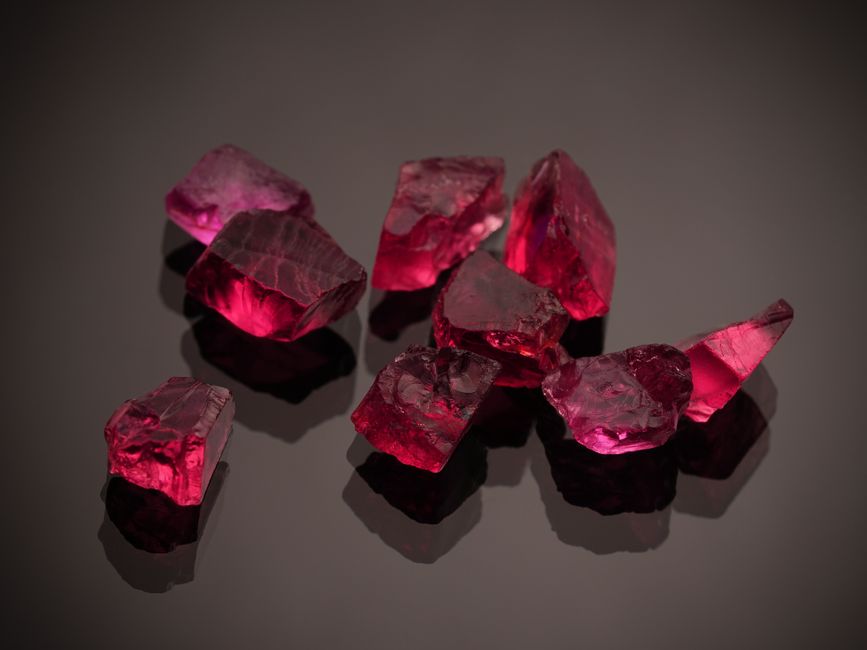
Ruby is the opposite end of the spectrum. Heavier color, harder stone, longer history. Mineralogically, it's corundum — the same crystal family as sapphire — colored red by trace amounts of chromium. On the Mohs hardness scale it sits at 9, second only to diamond, which is why ruby has worn well on hands and necks for thousands of years without losing its surface.
The July Birthstone Ring · Ruby in 14K Gold is a clean bezel-set version that suits daily wear — slim band, low-profile stone, no prongs to catch on fabric. For the same color in a different format, the Ruby Birthstone Necklace and Ruby Stud Earrings keep the stone small enough to read as fine jewelry rather than statement red.


Aquamarine in the Cancer Pieces
You'll notice the Cancer disc necklace uses aquamarine — not alexandrite or ruby. That's intentional. Aquamarine reads as Cancer's element (water) more honestly than either birthstone: pale blue, transparent, calm. The GIA identifies aquamarine as the gem variety of beryl colored blue by iron impurities, with the best stones showing a soft sea-blue without grey or green undertones. It's the stone Cancer wears when the birthday isn't the point — when the sign itself is.
How to Choose by Birth Month
If you're shopping for a specific Cancer, the easiest filter is when they were born.
Cancer born June 21–30: Alexandrite is the technically correct birthstone, but it's also a less recognizable one — most people won't know what they're looking at. That's a feature or a bug depending on the wearer. If they like quiet conversation-starters, alexandrite is perfect. If they want a stone people recognize on sight, skip to ruby or stick with the aquamarine zodiac piece.
Cancer born July 1–22: Ruby is the right call. It's iconic, it photographs well, and it works in every metal color. The Ruby Birthstone Necklace in 14K gold is the most flexible everyday version — small enough to layer, distinct enough to wear alone.
If you're not sure of the exact day: The Cancer disc necklace bypasses the question entirely. Aquamarine reads as Cancer's element across the whole sign, regardless of birth date. It's also the safest gift if you don't want to ask for the birthday and ruin the surprise.
Most people don't know this: the modern birthstone list (the one with alexandrite for June) wasn't standardized until 1912 by the American National Retail Jewelers Association, and alexandrite was only added in the 1950s. The traditional June stone was pearl. If you're shopping for a Cancer who prefers older traditions, ruby or aquamarine reads truer to the sign's actual history than alexandrite does.

How to Wear Cancer Pieces Day to Day
Cancer jewelry rewards restraint. The pieces work best when they look like things the wearer has owned for years — chosen, not collected.
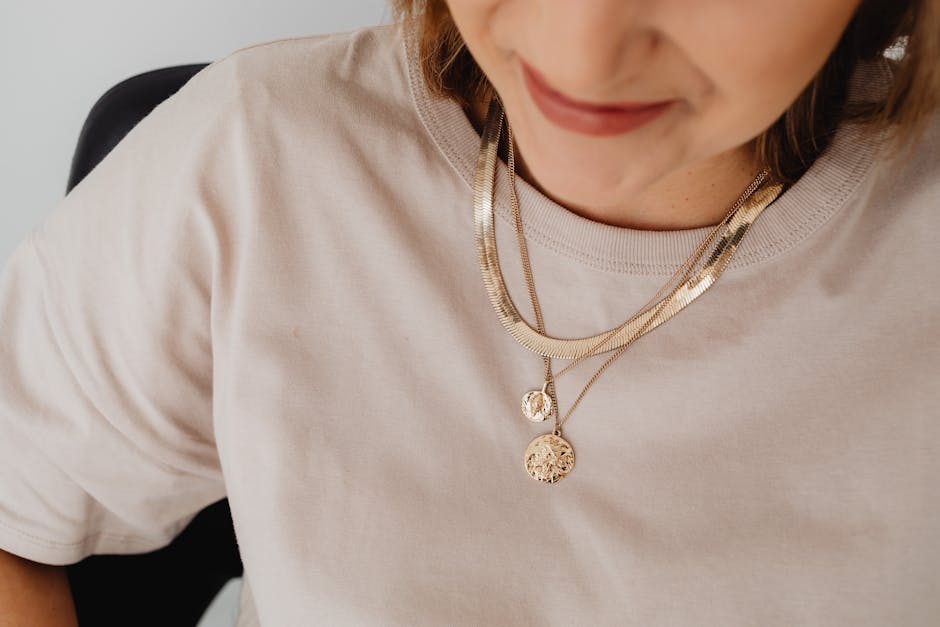
Solo. The Cancer disc on a single 16–18 inch chain is the cleanest possible version. It sits in the hollow at the base of the neck and reads as personal rather than astrological. Pair with a crewneck, a button-up, or anything with a visible collarbone.
Layered. If you're combining the disc with another necklace, pick a different chain length and a different size. A 16-inch zodiac disc plus an 18-inch birthstone necklace gives you two distinct visual points — the disc near the throat, the stone closer to the sternum. Keeping the same metal (14K gold across both) keeps the layering quiet. See the full layering guide for proportions.
Rings. A single bezel-set birthstone ring on the index or middle finger is the most flattering placement — visible without being decorative. If you're stacking, keep all rings in the same metal and vary stone vs. plain band rather than scale.
Studs. Cancer-stone stud earrings are the most everyday format. Small enough to wear to sleep, distinct enough to register as jewelry rather than placeholder. The Ruby Studs in particular are the piece a Cancer is likely to wear every single day for a year without thinking about it.
What to Look For When Buying
A few quick standards before you click buy on any zodiac or birthstone piece:
- Solid 14K gold, not plated. Plating wears off within a year of regular wear. Solid gold doesn't. 14K (58.3% gold) is the working ratio for daily-wear jewelry — hard enough to resist scratches, gold enough to retain warmth and color.
- Bezel or low-profile settings. Prongs are beautiful and slightly impractical. For pieces you'll actually wear every day, bezels protect the stone and don't catch on knit fabrics or hair.
- Stone origin disclosure. Lab-grown stones (especially alexandrite) should be clearly labeled. Natural rubies and aquamarines should specify treatment status (heated, untreated). Reputable jewelers don't hide this — the GIA's ruby reference notes that nearly all rubies on the market are heat-treated, so disclosure is the norm, not the exception.
- Chain quality on necklaces. A 14K gold cable chain at 0.8–1.2mm is the sweet spot for zodiac and birthstone pendants — strong enough to last, fine enough to read as delicate.
The full Celestial Signatures collection holds the zodiac discs and complete sign jewelry. For birthstones in every format, the Birthstone Edit spans necklaces, earrings, and the birthstone ring stack.
FAQ
What is the actual birthstone for Cancer?
Cancer spans two calendar months, so there are two: alexandrite for June (with pearl as the traditional alternative) and ruby for July. Both are correct depending on birth date. If you don't know the date, aquamarine — Cancer's elemental water stone — works for the whole sign.
What color jewelry suits Cancer best?
Cool tones — pale blue, white, silver — read most naturally as Cancer's element. That said, ruby works well for July Cancers, and warm 14K gold flatters most skin tones regardless of sign. The most flexible answer: gold as the metal, with a soft-colored stone (aquamarine, lab-grown alexandrite, pearl) for cool effect or ruby for warm.
Is lab-grown alexandrite as good as natural?
Optically and chemically, yes. Lab-grown alexandrite has the same crystal structure, hardness (8.5 Mohs), and color-change behavior as mined material. The main difference is rarity and price — natural alexandrite of decent size is one of the most expensive stones in the world, while lab-grown versions are accessible at a fraction of the cost. For everyday wear, the lab version is the practical choice.
Can a non-Cancer wear a Cancer necklace?
Yes. The zodiac disc can be worn for a partner, parent, or child whose sign it represents — the same logic as wearing someone's initial. It's a way of carrying a person, not a self-identifier requirement.
What's the difference between the aquamarine Cancer disc and the diamond Cancer necklace?
The disc is a small coin pendant with the glyph stamped into 14K gold and a single aquamarine accent — it reads as a zodiac medallion. The diamond version is a more linear interpretation of the glyph with a diamond accent — it reads as fine jewelry first and zodiac second. The disc is more recognizable; the diamond version is more discreet.
How do I care for ruby and alexandrite?
Ruby (9 Mohs) is hard enough for daily wear with no special care — warm water and mild soap. Alexandrite (8.5 Mohs) is similarly durable. The 14K gold setting needs an occasional polish with a microfiber cloth. Avoid ultrasonic cleaners on alexandrite if it has any visible inclusions, per American Gem Society care guidance.
Is the Cancer symbol the same as the crab?
The glyph (♋) is a stylized rendering of a crab — two curved shapes that historically represented the crab's claws. In jewelry, it reads abstractly: most people who don't know the zodiac see two interlocking curves rather than a literal crab.
The Piece You'll Reach For
Cancer's best quality as a wearer is consistency. The piece that gets reached for in the morning isn't the loudest one in the box — it's the one that has earned its place by feeling right under a sweater, in a meeting, at dinner, asleep. Pick the version of Cancer jewelry that meets that bar.
If you're buying for someone else, the Cancer disc with aquamarine is the safest choice — it works across the whole sign and doesn't require knowing the birth date. If you're buying for yourself and you know your birth month, the alexandrite ring (June) or ruby ring (July) becomes a daily piece you stop thinking about, in the best way. Either path leads to the same outcome: something with meaning, worn quietly, kept for a long time.


