
Ruby: July's Birthstone and How to Choose One Worth Owning
A ruby and a blue sapphire are the same mineral. Same crystal, same hardness, same chemistry — the only difference is a pinch of chromium that turns one of them red. That red is the whole reason ruby has been the most coveted colored stone on earth for two thousand years, and it is also why a ruby you buy this July will look exactly the same on your hand in fifty years.
If you were born in July, ruby is your birthstone. But the practical questions are the same whether you are buying for yourself or for someone else: what separates a stone worth owning from a red piece of treated glass, and how do you wear it so the color actually reads? Here is what a jeweler would want you to know before you spend anything.
What Actually Makes a Ruby
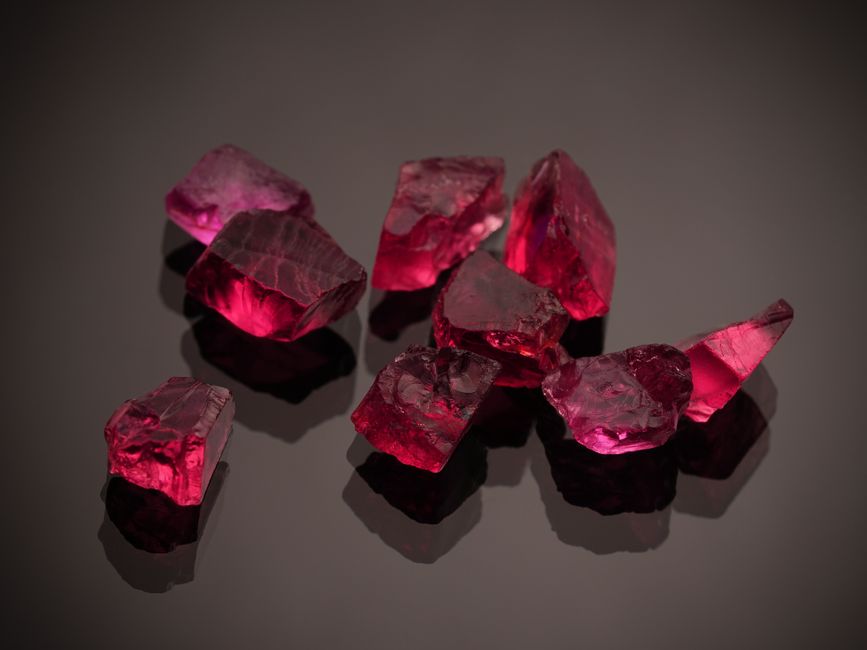
Ruby is the red variety of corundum, a crystalline form of aluminum oxide. Every other color of gem-quality corundum — blue, pink, yellow, green, colorless — is called sapphire. Ruby is the lone exception that earns its own name, and the thing that earns it is chromium. When chromium atoms slip into the crystal in place of aluminum, they absorb green and yellow light and transmit deep red. The more chromium, the more intense the red, up to the point where the same element starts causing internal strain and fractures. Nature is stingy with clean, richly colored ruby for exactly this reason, which is most of why fine ruby is one of the most expensive gems per carat on the market.
Here is something most people who own a ruby never learn: the chromium that makes it red also makes it glow. Under sunlight or any light source with ultraviolet in it, chromium fluoresces red, and that internal red light layers on top of the stone's body color. It is why the finest Burmese rubies look almost lit from within outdoors, and why a good ruby can seem to intensify when you step out of a store into daylight. The Gemological Institute of America describes this fluorescence as one of the defining optical signatures of top-color ruby.
On the practical side, ruby scores a 9 on the Mohs hardness scale, second only to diamond at 10 and tied with sapphire. For context, quartz — the mineral in everyday dust and grit that scratches most surfaces — is a 7. That two-point gap matters more than it sounds: hardness is measured on a scale where each step up represents a large jump in scratch resistance. A ruby set in a ring will shrug off the daily contact that would slowly frost the surface of a softer stone. This is the quiet reason ruby has been a ring stone for centuries, long before anyone could explain the chemistry.
What to Look For: Color First, Then Everything Else
With diamonds, cut drives the value conversation. With ruby, it is color, color, and then a distant everything-else. The GIA evaluates ruby color across three dimensions, and understanding them is the single most useful thing you can do before buying.
- Hue: The most prized ruby is pure red to slightly purplish red. A little purple actually helps — it makes the red read as richer. Too much orange or brown pushes the stone toward garnet territory and pulls the price down fast.
- Tone: Medium to medium-dark. Too light and the stone reads pink (at which point the trade may call it pink sapphire, not ruby). Too dark and it reads black-red in anything but bright light, which kills the glow.
- Saturation: The single biggest value driver. The most valuable rubies are vividly saturated with no gray or brown muddying the color. The legendary trade term "pigeon's blood" — originally used for the finest Burmese material — describes a vivid, pure red with a soft blue-red fluorescent undertone.
Clarity comes next, and ruby plays by different rules than diamond. Nearly all natural rubies contain inclusions; a ruby with no inclusions at all should make you suspicious that it is synthetic or glass. What you want are inclusions fine enough that they do not disrupt the color or transparency at arm's length. In fact, a specific type of fine needle-like inclusion, called silk, can scatter light and soften a ruby's color in a way that experts prize — and its presence helps confirm the stone is natural rather than lab-grown.
Cut and carat round it out. A good cutter orients ruby to show the best color face-up, sometimes sacrificing a little weight to do it. And because clean, well-colored ruby is genuinely scarce in larger sizes, price per carat climbs steeply as stones get bigger — a 2-carat fine ruby costs far more than twice a 1-carat equivalent. For everyday jewelry, this is why a smaller, well-chosen ruby in a clean setting almost always looks better and wears better than a large, murky one. The July Birthstone Ring in 14K gold is built on exactly this logic: a natural ruby chosen for saturation and set in a slim solid-gold band that lets the color, not the size, do the work.

Natural, Heated, or Glass-Filled: Know What You're Paying For
This is the section that saves you money and heartbreak, so read it before you buy anything red.
Heat treatment is standard, disclosed, and accepted throughout the trade. The vast majority of rubies on the market have been heated to improve color and dissolve some internal silk, and this has been routine for centuries. Heating is permanent and stable, and the American Gem Society lists it as the normal, expected treatment for the July birthstone. A heated natural ruby is still a natural ruby. There is nothing to be wary of here — an untreated ruby with fine color commands a premium and a lab certificate, but for everyday jewelry, heated natural ruby is exactly what you should expect.
Glass-filled, or composite, ruby is the trap. Here is the thing most buyers have never heard: a large share of the suspiciously cheap "rubies" sold online and in bargain settings are low-grade corundum whose cracks have been filled with lead glass to fake transparency and color. These composites can be more than half glass by volume. They look convincing in the case, but the GIA's gemological research has documented that they are fragile in ways real ruby is not: a jeweler's torch during a routine repair can melt the glass, and even household lemon juice or acidic cleaners can etch it. A composite ruby is not a bargain; it is a maintenance problem dressed in red.
How to protect yourself without a lab in your pocket: buy natural ruby from a seller who states the treatment plainly, be deeply skeptical of any large "ruby" priced like costume jewelry, and for any significant purchase, ask for or request a report from GIA or the American Gem Society Laboratories. If a stone is described only as "genuine ruby" with no mention of treatment and a price that seems too good, assume it is glass-filled until proven otherwise.
How to Wear Ruby So the Color Reads
Ruby is one of the easiest colored stones to style because its red is a near-universal flatter, but a few choices make the difference between a stone that pops and one that goes muddy.
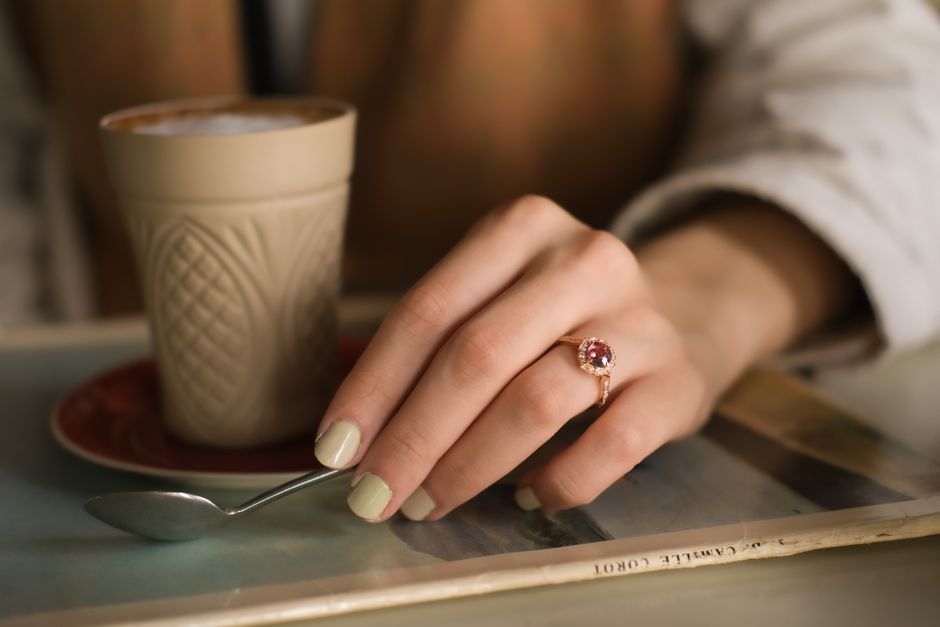
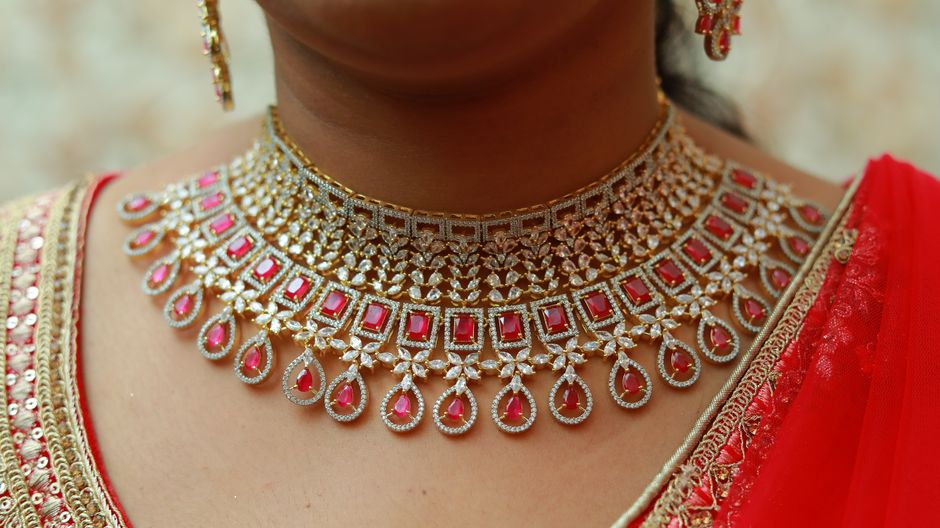
Metal. Warm yellow gold is the classic partner — the warmth in the metal echoes the warmth in the red and makes the stone feel richer and more traditional. Rose gold pushes the whole piece toward the pink-red end and reads romantic and contemporary. White gold or platinum does the opposite: the cool metal throws the red into sharp contrast so it reads as a crisp, jewel-bright point of color. None of these is wrong; they simply set different moods, and it is worth deciding which one you want before you buy the setting.
Format. Because ruby is hard enough for daily wear, a ring is a genuinely practical choice rather than a fragile one. A pendant keeps a single ruby at the center of the neckline where the color catches the eye — the Ruby Birthstone Necklace in 14K gold sets one natural ruby on a fine chain, sized to sit as an everyday piece rather than an occasion-only one. For ears, the Ruby Birthstone Stud Earrings put two small points of red exactly where they frame the face, and studs are the format most people wear without thinking, which makes them the safest gift bet. Worn together, ring, pendant, and studs read as an intentional set rather than three separate impulses.


For July birthdays specifically. Ruby is the birthstone, but July also spans two zodiac signs, which opens a second thoughtful angle for a gift. Birthdays through July 22 fall under Cancer — the Cancer Zodiac Necklace with Natural Diamond in 14K gold marks the sign directly. From July 23 onward it is Leo, and the Leo Zodiac Necklace with Natural Diamond does the same. Pairing a ruby piece with the wearer's sign is a way to make a July gift feel specific to the person rather than just to the month. You can browse both approaches in the Birthstone Edit and the Birthstone Ring Edit.


Caring for Ruby Jewelry
Natural, untreated, and heat-treated ruby is among the most forgiving gems to own, precisely because of that Mohs 9 hardness. A few habits keep it looking right:
- Cleaning: Warm water, a drop of mild dish soap, and a soft brush around the setting. Rinse and dry with a lint-free cloth. This is all a healthy natural ruby needs.
- Ultrasonic and steam cleaners: Generally safe for natural and heat-treated ruby with no major fractures — but never for glass-filled composite ruby, which the heat and vibration can damage. If you are not certain what you own, skip both and use soap and water.
- Chemicals: Take ruby off before bleach, pool chlorine, and harsh cleaners, which attack the metal of the setting even when the stone is fine. Acidic substances can etch a glass-filled stone, another reason to know what you have.
- Storage: Ruby is hard enough to scratch almost everything else in your jewelry box, so store it separately in a soft pouch. Only diamond and other corundum can scratch it back.
Follow this and a ruby will genuinely outlast you. That durability, more than any legend, is why ruby became the stone people passed down: it is one of the few colored gems that survives being actually worn, every day, for a lifetime.
Frequently Asked Questions About Ruby
What is July's birthstone?
Ruby is the traditional and modern birthstone for July, a designation it has held on the standardized birthstone list used across the American jewelry trade for more than a century. Its long association with the month predates the modern list — ruby has been a stone of high status and celebration across many cultures for two thousand years.
What is the difference between a ruby and a sapphire?
They are the same mineral: corundum. Ruby is red corundum, colored by chromium; every other color of gem corundum is called sapphire, including pink. The line between a deep-pink sapphire and a light ruby is a genuine gray area in the trade, judged by tone and saturation rather than a hard chemical boundary.
Are heat-treated rubies real rubies?
Yes. Heat treatment changes color and clarity by rearranging elements already present in the stone; it does not change the fact that it is a natural ruby. Heating is standard, permanent, stable, and disclosed throughout the trade. The treatment to actually watch for is lead-glass filling, which produces a fragile composite stone that is a different thing entirely.
What is a glass-filled or composite ruby?
It is low-grade corundum whose fractures have been filled with lead glass to fake transparency and color — sometimes more than half glass by volume. These stones look convincing but are fragile: a jeweler's torch can melt the filler and acidic liquids can etch it. They should be priced and disclosed as composites, not sold as natural ruby, and they are the main reason to be cautious with suspiciously cheap red stones.
Why is ruby so expensive?
Because the chromium that gives ruby its red also tends to cause internal fractures, clean stones with vivid, well-saturated color are genuinely rare, especially in larger sizes. Fine ruby ranks among the highest-priced gems per carat, and price climbs steeply with size. For everyday jewelry, a smaller ruby chosen for good color is a far better buy than a large one with dull or brownish color.
What color of ruby is the best?
A vivid, pure red to slightly purplish red, in a medium to medium-dark tone, with strong saturation and no gray or brown. The historic trade term for the finest of this range is "pigeon's blood." Slightly purplish red is preferred over orangey or brownish red, and the color should hold up and even glow in daylight rather than going dark.
Can I wear a ruby ring every day?
Yes. At Mohs 9, ruby is one of the most durable colored gems for daily wear and is well suited to rings, which take the most contact of any jewelry. Natural and heat-treated ruby needs only routine soap-and-water cleaning. The main caution is avoiding hard knocks against a corner, which can chip almost any faceted stone regardless of hardness.
Ruby earned its place at the top of the colored-stone hierarchy honestly. The same trace of chromium that makes it rare makes it glow, and the same hardness that makes it hard to find makes it survive a lifetime of being worn rather than admired in a drawer. Choose one for its color, know what treatment you are buying, and it becomes exactly the kind of piece July was made for — red, alive, and yours for good. Intention, made tangible.


