
Meaningful Jewelry Gift Guide: The Right Piece for Every Occasion
Most gifts tell someone you remembered the date. Symbolic jewelry tells them you paid attention to who they are. A zodiac necklace with their birthstone in 14K gold, a lotus pendant after a year that cost them something, a guardian angel medal the day before they leave for something new — these are the pieces that end up worn for twenty years. This guide is organized by occasion, not category or price point, because the right jewelry gift is almost never the most expensive one. It’s the one that fits the moment.

Birthday Gifts: Zodiac and Celestial Pieces
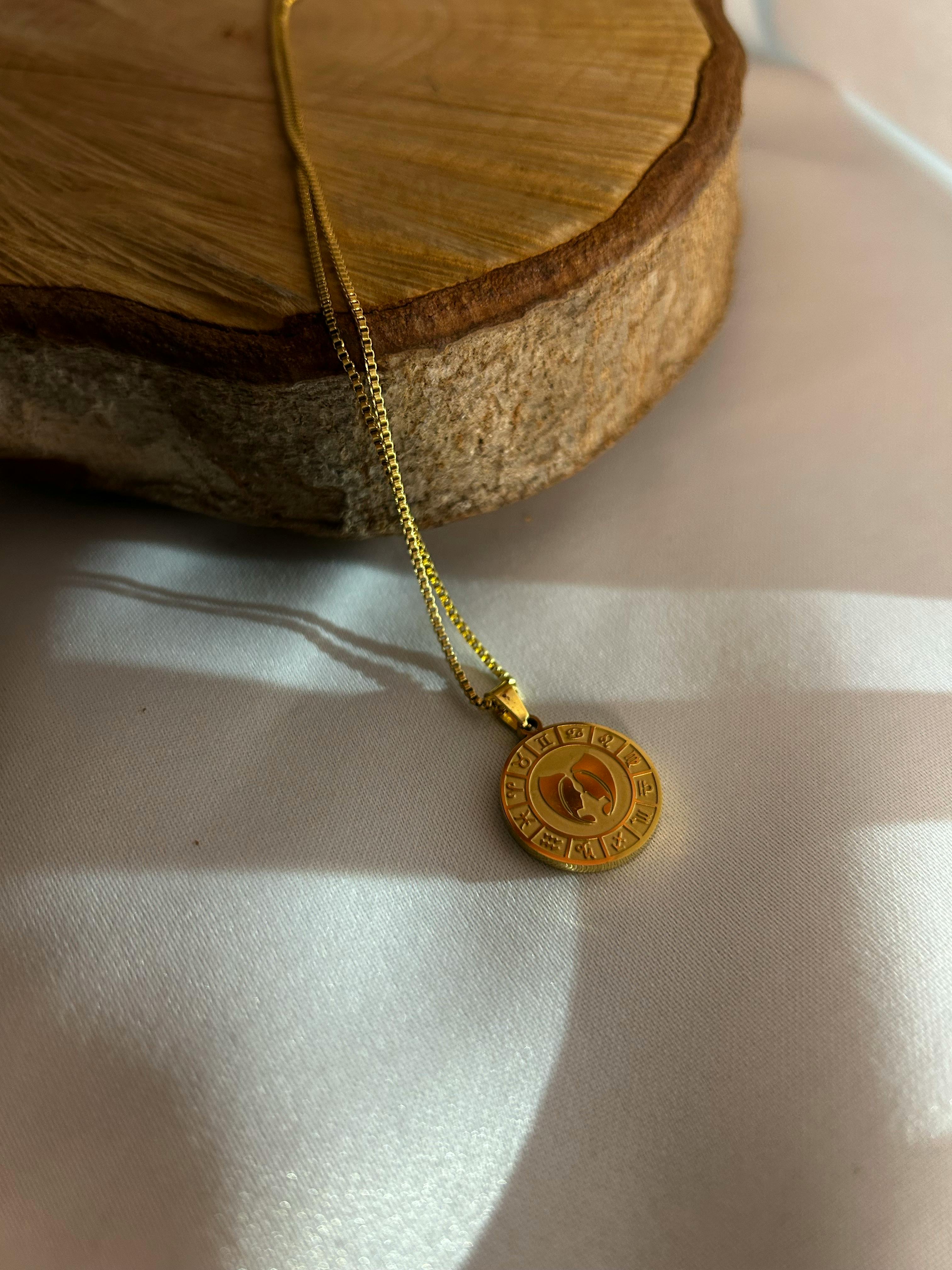
The zodiac is the most personal category in jewelry, and it’s consistently underused as a gift. A piece built around someone’s sun sign — their actual birthstone, cast in solid gold — says something specific about who they are. That specificity is the whole point.
The Aries Zodiac Disc Necklace with Natural Emerald in 14K Gold shows how this works at its best: the Aries glyph rendered in 14K gold, set around a genuine emerald. Not synthetic — the actual stone, with the depth of color and light behavior you can’t replicate in a lab. For a Taurus, it’s natural Mexican fire opal. For a Sagittarius, natural amethyst. Each stone has a geological origin as interesting as the mythology attached to the sign.
The newer ring format of the same idea: the Birthstone Ring Edit sets each birth month's stone in a slim solid 14K gold band. The January Garnet Ring for a winter birthday, the March Aquamarine Ring for a March one, the July Ruby Ring for a midsummer birthday — the ring sits on the wearer's own hand all day, which makes it the most-present format of a birthstone gift.


Most people don’t realize that the stones linked to each zodiac sign predate modern birthstone lists by centuries. Zodiac gemstone associations come from Hellenistic astrology; the “official” modern birthstone list wasn’t standardized until 1912, by the American National Retail Jewelers Association. The older pairings are stranger, more specific, and more interesting as gifts.
For someone who wears their birth sign but also gravitates toward celestial motifs, the Diamond Crescent Moon Necklace in 14K Gold works across both. The crescent has signified renewal in Babylonian, Islamic, and Indigenous American traditions alike. It makes a natural birthday piece precisely because birthdays and new moons share the same logic: a count resets, a new cycle begins. The diamond accent catches light the way the actual moon does — by reflecting something larger than itself.

Browse the full Celestial Signatures collection to match sign to stone, or find a celestial piece that fits how someone moves through the world.
If the recipient already owns a zodiac piece — or simply prefers the gem to the constellation — our Birthstone Edit sets each month's stone as a clean bezel solitaire in 14K gold. The matching Birthstone Stud Earrings work as the standalone gift, the second gift in a pair, or the studs to layer with the recipient's existing pendant collection.
New Chapters: Graduation, Big Moves, Starting Over
The hardest gift category isn’t “what do they like” — it’s “what fits this specific moment.” Graduation, a new job, a fresh city, a deliberate decision to start something over: these are occasions where the person already knows everything has changed. The gift that lands is the one that reflects what it means to them, not just to the calendar.
The lotus is the right symbol for exactly this. It grows in conditions that would stop most plants — silty water, low light, difficult sediment — and produces something remarkable. That’s not metaphor layered over biology. That’s how the plant actually works. The The Lotus — Sterling Silver Necklace is a clean, wearable rendering of that idea: a well-proportioned lotus in sterling silver that reads as both meaningful and genuinely elegant. It works as a graduation gift, as a “you made it through” piece, or as a marker for someone’s deliberate choice to start again.

The Claddagh Ring with Garnet in Sterling Silver carries different weight — it’s the right piece for relationship milestones, anniversaries, or friendships that have lasted through something hard. The Claddagh originated in the fishing village of Claddagh, County Galway, in the 17th century: two hands holding a crowned heart, representing friendship, love, and loyalty. The garnet at the center — deep red, one of the oldest gemstones in continuous human adornment, favored by ancient Egyptians and Celtic craftspeople alike — deepens the meaning without overcomplicating it. How it’s worn still communicates: heart pointing outward means single; heart pointing in means committed. Few pieces of jewelry carry their own grammar.

For someone rebuilding after a genuinely difficult period, The Phoenix — Sterling Silver Necklace with Turquoise names the moment without explaining it. According to the GIA, turquoise is among the oldest gemstones in continuous human use — mined and worn for over 6,000 years across Native American, Persian, and Egyptian cultures. On a phoenix, it reads as protection and resilience at once. It’s the piece you’d wear quietly, every day, as a reminder of something specific.

For Someone Going Through Something Hard
Protective amulets have been given as gifts in every culture on record. Roman bulla, Mediterranean evil eye amulets, Thai monk-blessed pendants, Irish Claddagh worn for protection — the forms differ, but the impulse is identical: when you care about someone and can’t control what happens to them, you give them something that carries the intention of keeping them safe.
The evil eye is the most globally recognized of these symbols. Its modern form — the circular cobalt-blue amulet — developed in Ottoman Turkey, but precursors appear across the Mediterranean as far back as 3300 BCE. Smithsonian Magazine notes the symbol appears in ancient Mesopotamia, Egypt, Greece, and Rome — and independently in cultures with no documented contact, making the evil eye one of the few symbols that may represent a genuinely cross-cultural human intuition about envy and vulnerability.
The Sterling Silver Evil Eye Necklace is the direct, everyday interpretation: cobalt-blue enamel set in sterling silver, the version someone will actually reach for each morning. For something more elevated — a significant occasion, or for someone who chooses their jewelry deliberately — the The Hamsa — Sterling Silver Necklace with Diamond pairs the open palm of protection with a natural diamond accent. Both read as jewelry first, symbol second, which is what you want in a piece worn consistently rather than ceremonially.


Browse the Protective Talismans collection for the full range — evil eye, hamsa, Eye of Horus, and Eye of Providence, all in sterling silver.
Faith Milestones and Devotional Gifts
Confirmation, First Communion, baptism, ordination — these are occasions where a generic gift misses the point entirely. What works is something devotional, wearable, and designed to be carried daily as a physical reminder of what the day meant. The piece should be understated enough to wear every day and specific enough to carry the weight of the occasion.
Guardian angel medals have served this function for centuries. The Sterling Silver 18mm Guardian Angel Medal Necklace is the standard form: a round sterling silver medal with the traditional guardian angel image, on an 18-inch sterling chain ready for immediate wear. The 18mm diameter is the right scale for daily wear — visible without being conspicuous, sized to layer under or over clothing without catching.

For someone whose faith is daily practice rather than milestone ceremony, an inscription piece works differently than a medal. The The Inscription — Sterling Silver Ring carries faith-based wording on a band designed for long-term wear, on the hand where the wearer sees it through the day rather than where other people see it from across the room. The format makes the wearer the primary audience — the right orientation for daily devotion. It also pairs cleanly with the Guardian Angel medal above as a two-piece set, where the necklace marks the milestone and the ring carries the daily practice.

How to Choose: What Actually Makes a Gift Land
The question that separates a meaningful jewelry gift from a forgettable one is usually this: does this reflect the person, or just the occasion? The best pieces do both. Here’s what actually matters in the decision:
- 14K gold for daily wearers; sterling silver for everything else. If the recipient wears jewelry through daily contact — shower, exercise, sleep — 14K gold is worth the investment. It resists tarnish, holds up to skin chemistry, and looks the same in twenty years. Sterling silver is excellent for regular wear but needs occasional polishing. Neither is a compromise; they suit different habits.
- Scale to what they already wear. Someone who wears delicate jewelry won’t reach for a statement pendant. Someone who layers will. Look at what they actually own before choosing size. A piece that fights their existing style won’t get worn regardless of quality.
- Natural stones for significant occasions. Genuine emeralds, garnets, aquamarines, and diamonds have inclusions, color variations, and formation histories that no synthetic can replicate. According to the GIA Gem Encyclopedia, the optical properties of natural gemstones — the way they interact with and refract light — result from unique crystalline structures that form over millions of years under specific pressure and temperature conditions. That’s part of what you’re giving.
- Symbol specificity is the whole point. A lotus because you know what this year cost them lands differently than a pendant that could have been chosen for anyone. Don’t be afraid to make a statement with the symbol. The more specific the choice, the more it will mean.
- When in doubt, choose sterling silver. It works alongside yellow, white, and rose gold without clashing, suits most skin tones, and is hypoallergenic for most wearers. Sterling silver gives a recipient flexibility to build around it — it’s the thoughtful default, not a fallback.
Frequently Asked Questions
What’s the best meaningful jewelry gift for a graduation?
A lotus or phoenix pendant is a natural fit — both symbolize emergence from difficult conditions into something better. For something more personal, a zodiac disc necklace in 14K gold with the graduate’s birthstone acknowledges who they are, not just what they accomplished.
For a more conservative variant of the same idea, a pair of 14K gold birthstone studs in her birth month is the classic American graduation gift — small, daily-wearable, and quietly personal.
Is it appropriate to give an evil eye as a gift?
Yes — and historically, gifting is the traditional method. The evil eye amulet was passed from person to person as protective jewelry, not purchased for oneself. A gifted evil eye carries the intention of the giver, which is exactly the point of protective symbolism.
What’s a good jewelry gift for Mother’s Day?
The best Mother’s Day jewelry reflects something specific about her — her sign, a symbol she identifies with, her faith, her aesthetic. A zodiac disc necklace personalizes by identity. A hamsa or evil eye acknowledges her protective role. A guardian angel or faith-inscription piece works for someone whose beliefs are central to who she is. The only wrong choice is something so generic it could have been selected for anyone.
For a route that's lower-stakes than picking a symbol, a solitaire from our Birthstone Edit in her birth month is hard to get wrong — her stone, in 14K gold, with no commitment to any particular meaning beyond "this is yours."
How do I know if someone prefers gold or silver?
Look at what they already own and wear. If observation isn’t possible, sterling silver is the safer choice — it works with warm and cool skin tones, complements gold pieces without clashing, and gives the recipient maximum flexibility to layer and build around it.
What’s the right jewelry gift for a confirmation or First Communion?
A guardian angel medal is the most traditionally appropriate choice — devotional, understated, designed for daily wear. The 18mm sterling silver medal necklace works for adults and older teenagers; the 12mm version is right for younger recipients. A faith-inscription piece (Faith Over Fear, Faith Hope Love, Blessed) is also strong for someone who expresses belief through language rather than imagery.
How much should I spend on a symbolic jewelry gift?
Sterling silver symbolic pieces sit at modest prices; solid 14K gold pieces with natural stones cost more, often substantially so. The number matters less than the attention behind the choice. A well-chosen evil eye necklace lands better than a far more expensive piece selected out of obligation. Quality comes first from thoughtfulness, then from craftsmanship.
Can the Claddagh ring be given as a non-romantic gift?
The Claddagh was designed to represent friendship as explicitly as love — the two hands in the design represent friendship directly. It has been given between close friends, mothers and daughters, and sisters for centuries. Worn with the heart pointing outward, it signals friendship rather than romantic commitment. The choice to give one makes a statement about the relationship itself.
The pieces worth giving aren’t the most expensive or the most recognizable. They’re the ones that show you were paying attention. That’s what intention, made tangible, actually means.


