
What Does Your Jewelry Say About You? The Psychology of Adornment
Look down at what you're wearing right now. There's a reason you put it on this morning — even if you can't name it. The necklace you've worn every day for three years. The ring you reach for before a difficult meeting. The piece you bought after something changed. Jewelry is rarely just decoration. It's a shorthand for something you want to carry.
Anthropologists and psychologists who study adornment behavior have found that humans have been wearing symbolic objects for at least 130,000 years — longer than we've had written language, longer than agriculture. Whatever jewelry does for us, it's doing something fundamental.
Jewelry as Identity Signal
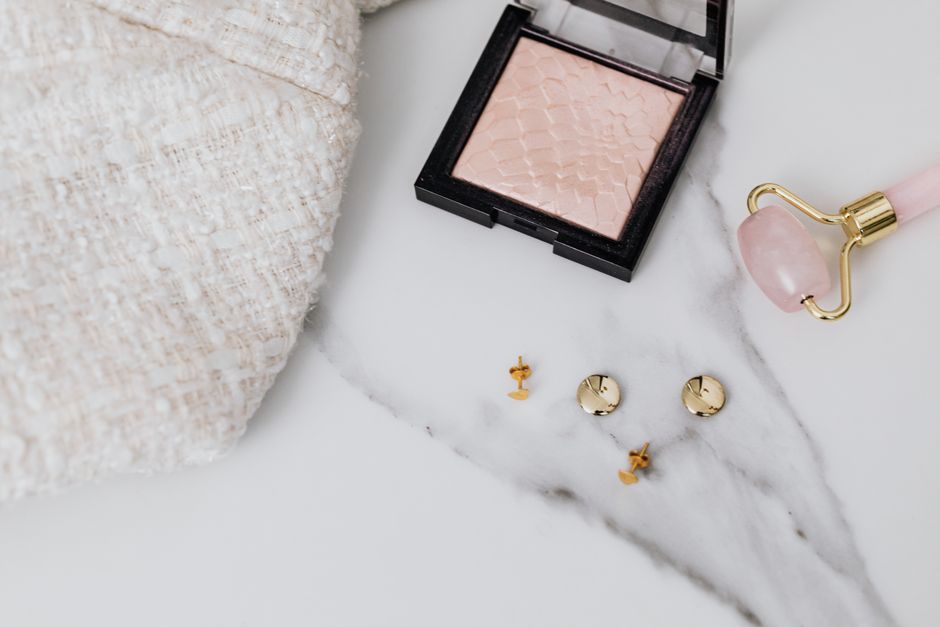
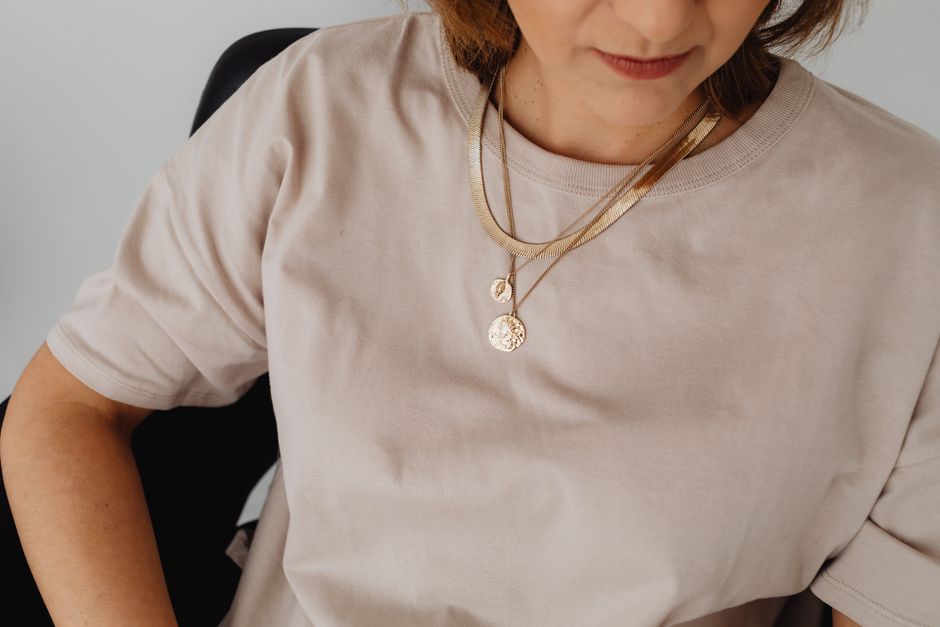
The most consistent finding in adornment research is that jewelry communicates identity — both to the world and back to ourselves. A study published in the Journal of Consumer Research found that when people wore objects they considered personally meaningful, their sense of self-continuity was stronger — they felt more like themselves, even in unfamiliar situations.
This plays out in obvious ways (a wedding ring, a family heirloom, a graduation gift) and in subtler ones. The person who wears a lotus pendant every day isn't necessarily announcing their spiritual practice. They may simply want to carry a reminder that they've grown through something difficult. The symbol does quiet work.

What's worth understanding: the meaning doesn't have to be legible to anyone else. Most of the signaling happens inward first. The piece you put on becomes part of how you see yourself that day.
The categories tend to cluster around a few core identities:
- Protective identity — pieces that say "I keep myself safe" or "I believe something watches over me." Evil eye, hamsa, amulets.
- Continuity identity — pieces that connect to lineage, memory, or someone who mattered. Heirlooms, initials, meaningful dates.
- Aspirational identity — pieces that represent who you're becoming. A symbol you grew into, a quality you want to embody.
- Spiritual or philosophical identity — pieces that reflect a worldview: balance, impermanence, connection, faith.
Most jewelry that gets worn daily falls into one of these four. The pieces you stop wearing usually don't.
Why Protection Symbols Endure
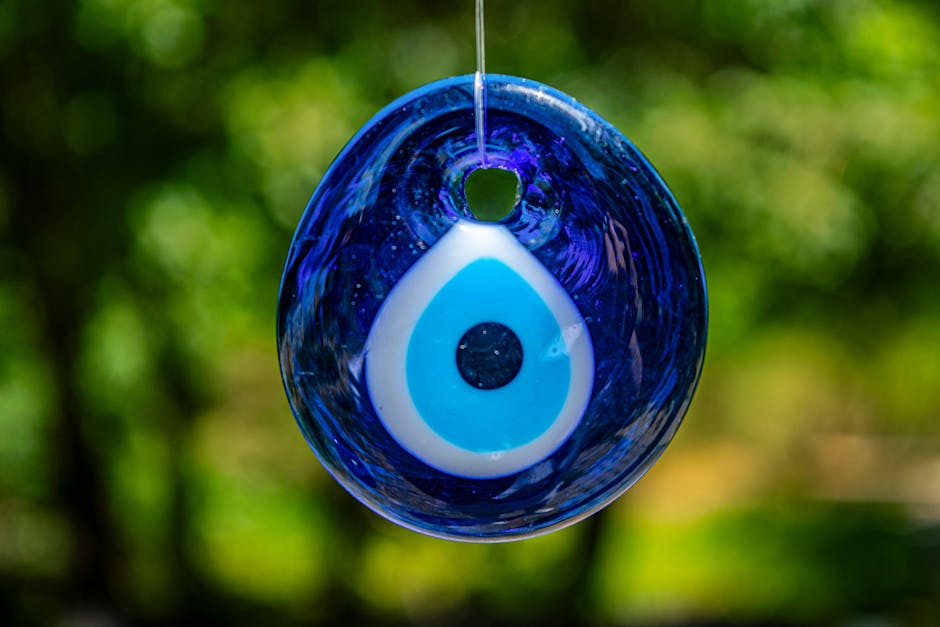
If any category of jewelry has proven its staying power across every culture and every century, it's protective amulets. The evil eye exists in some form across the Mediterranean, Middle East, South Asia, and Latin America. The hamsa appears in Jewish, Islamic, and older Mesopotamian traditions. Protective symbols in various forms show up in Celtic metalwork, Thai amulet culture, Native American turquoise work, and Roman bulla worn by children.
The universality is striking. Smithsonian Magazine's coverage of evil eye research notes that belief in the envious gaze as a source of harm appears independently in cultures with no known contact — suggesting it's less a transmitted superstition and more a consistent feature of human social psychology.
Here's what that means practically: when you wear a protective symbol, you're participating in one of the oldest continuous human behaviors. That history is part of what the piece carries.
The most versatile protective pieces are the ones that don't announce themselves. A sterling silver hamsa with a diamond accent reads as elegant jewelry to most people; to the wearer, it's a specific object with a specific intention. A classic evil eye necklace works the same way — the symbol is familiar enough to carry meaning, understated enough to wear anywhere.


Most people don't know this: the blue color of traditional evil eye amulets was specifically chosen to mimic the blue eyes that were considered most likely to cast the harmful gaze in Mediterranean cultures. The color itself was a counter-charm. Modern evil eye jewelry has largely moved past this specificity, but the visual logic persists.

What the Research Actually Shows
There's a body of psychological research on what's called "extended self" theory — the idea that the objects we choose and keep become genuinely part of our sense of self, not just accessories to it. Russell Belk's foundational 1988 paper in the Journal of Consumer Research established that possessions, especially those worn on the body, function as extensions of identity rather than external objects.
More recent work has refined this. A 2012 study at Northwestern found that wearing a symbolic garment (in this case, a lab coat described as belonging to a doctor versus a painter) measurably affected performance on attention tasks — a phenomenon researchers called "enclothed cognition." The same principle applies to jewelry: the object you wear, and what you believe about it, changes how you think and act.
This is the mechanism behind what people often describe as the feeling of "armor" — the necklace you wear when you need confidence, the bracelet that reminds you of someone who believed in you. It's not placebo in the dismissive sense. It's a real cognitive effect with documented mechanisms.
The practical implication: the jewelry that works hardest for you is the jewelry you've given meaning to, not the most expensive piece in your collection. A simple inscription ring worn every day does more psychological work than a diamond you keep for special occasions.

Celestial jewelry — moons, stars, suns — taps into a different strand of this. The Metropolitan Museum's collection of celestial-motif jewelry spans cultures from Mesopotamia to Renaissance Europe, all using the same visual shorthand: the heavens as a source of order, rhythm, and orientation. A moon phase bar necklace connects to that tradition — carrying the idea of cycles, of change that is also pattern.

How to Choose Jewelry With Intention
The question of "what should I wear" becomes more interesting when you approach it as "what do I want to carry."
Start with what you're drawn to, not what you think you should want. If you keep gravitating toward balance symbols — yin yang, a simple balance pendant — that's information about where your attention is. If you find yourself looking at celestial pieces, you may want something that gestures at larger cycles than your current moment.

For daily wear: Choose one piece with a clear meaning to you, not a collection of pieces with vague ones. The piece you'll actually reach for every morning is the one that's simple to put on and specific in what it means to you. A single ankh necklace worn as a reminder of renewal lands differently than five pendants worn because they all seemed nice.

For gifts: Meaningful jewelry requires that you've paid attention to what matters to the person. A symbol they've mentioned, a quality you see in them, a moment you want to mark. Generic "meaningful jewelry" gifts often feel like an aesthetic choice dressed up as something more. The pieces that get kept are the ones where the giver clearly thought about the specific person.
For building a collection: Fewer pieces with clearer meanings tend to create more coherent style than many pieces with overlapping symbolism. Think in terms of categories — one celestial piece, one protective piece, one piece that means something personal — rather than accumulating everything that appeals in the moment.
Metal and material matter too: Sterling silver has a quieter, more personal quality. Gold reads more formal and enduring. The distinction isn't trivial — the material is part of what the piece says. A geometric sun in 14K gold has a different register than the same motif in silver. Neither is wrong; they're different statements.

Frequently Asked Questions
Why do people wear the same piece of jewelry every day?
Daily wear is typically about anchoring — the piece becomes part of a routine and, over time, part of identity. The ritual of putting it on has its own value, separate from how the piece looks. Research on habits suggests that consistent rituals, even small ones, contribute to a sense of stability and self-continuity.
Does the meaning of a symbol matter if you don't share the original culture?
This is a genuine conversation worth having. Most symbol scholars distinguish between appropriation (taking a sacred object without understanding or respect) and appreciation (wearing a symbol that resonates with you, while understanding its origins). Knowing the history of what you wear — the evil eye's 5,000-year story, the hamsa's cross-cultural presence, the ankh's Egyptian origins — deepens the meaning rather than diminishing it. Ignorance is the problem, not the wearing.
Is there a difference between religious jewelry and symbolic jewelry?
Yes, though the line can blur. Religious jewelry (a cross, a Star of David, a crescent) carries doctrinal meaning within a specific faith tradition and is typically worn as a statement of belief. Symbolic jewelry uses motifs from cultural or spiritual traditions for their resonance, without necessarily claiming adherence to a specific religion. Many people wear both; the distinction is mostly about intention and context.
What makes a piece of jewelry feel meaningful versus just decorative?
Usually it's the story attached: who gave it, when you bought it, what it represents. But pieces can become meaningful through use — the necklace you happened to wear on an important day accumulates significance that wasn't there at purchase. This is why heirlooms have such weight; they carry decades of accumulated story.
How many pieces of jewelry should you wear at once?
There's no rule, but the pieces that read as intentional tend to be ones where each element can be seen and appreciated on its own. When everything competes, nothing lands. A useful editing question: if you had to choose two pieces from what you're wearing today, which two would they be? Those are probably the right two.
Can jewelry help with anxiety or emotional regulation?
This is an area where personal experience and research align more than you might expect. Fidget behaviors — spinning a ring, touching a necklace — activate sensory feedback that can interrupt anxious thought patterns. More significantly, wearing an object associated with safety, love, or belief can lower cortisol response in stressful situations. It's not a medical treatment, but it's a real mechanism.
What jewelry should I wear if I want something that lasts and deepens over time?
Solid metals (14K gold, sterling silver) over plated or base metal — pieces that patina and age gracefully rather than degrade. Simple, strong symbols rather than trend-driven designs. One piece with a clear personal meaning beats a collection of aesthetically interesting pieces that don't connect to anything. The jewelry you'll still be wearing in twenty years is almost always the piece that meant something when you bought it.
The Piece You Reach For
The most useful question to ask about any piece of jewelry isn't "does this look good?" It's "do I want to carry this with me?" The look is easy to evaluate; the carrying is where it gets interesting.
Every day you put something on is a small choice about identity. The cumulative effect of those choices — wearing the lotus because it reminds you of what you've grown through, the sun because you want to orient toward light, the hamsa because you believe in protection — is a wearable autobiography. Not performative. Not for anyone else's benefit. Just the practice of knowing what you value and keeping it close.
That's what the 130,000-year history of human adornment is about. Not decoration. Something closer to intention, made tangible.
Explore the Protective Talismans collection or the full AuAlchemy range to find pieces worth carrying.


