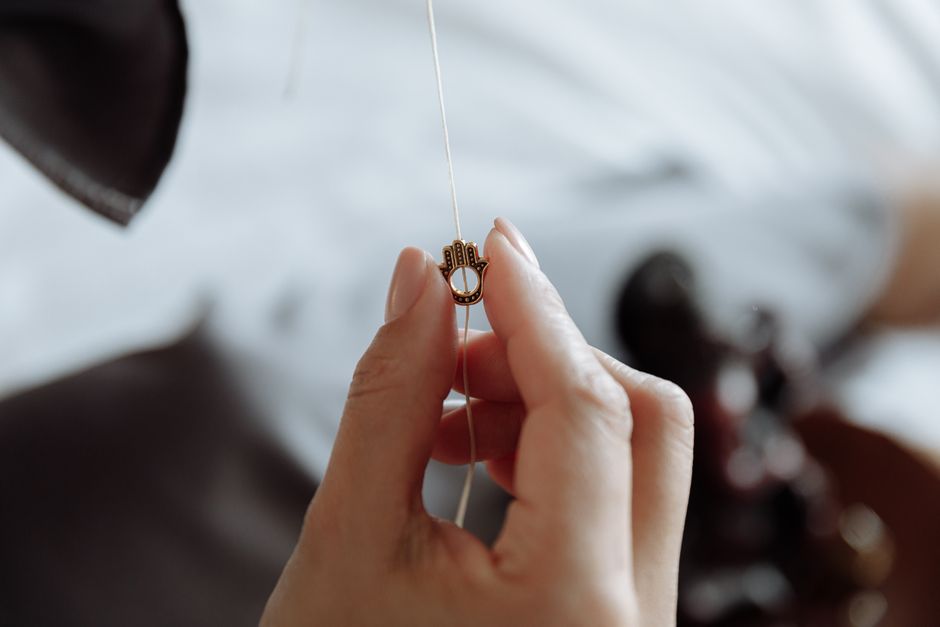
In the sacred precinct of ancient Carthage — the tophet where Phoenician priests conducted rites to the goddess Tanit — archaeologists have recovered more than 6,000 stone stelae bearing a symbol that is instantly recognizable today. Carved into votive offerings and temple walls dating to the eighth century BCE, it depicts an open hand, fingers pointing upward, often with an eye at its center. These stones predate the codification of the Hebrew Bible. They predate the birth of Islam by more than a millennium. They are, in the current state of the archaeological record, the oldest surviving ancestors of what billions of people worldwide now call the hamsa.
That a symbol worn by a teenager in Brooklyn, a grandmother in Marrakech, and a bride in Tel Aviv all traces back to the same Phoenician goddess cult is one of the more quietly astonishing facts in the history of jewelry. The hamsa did not belong to any single religion before it belonged to all of them.
Photo: Thirdman / Pexels License
What Does "Hamsa" Mean?
The word hamsa (حمسة) derives from the Arabic root khamsa (خمسة) — the number five — a direct reference to the five fingers of the open hand. In Hebrew, the symbol carries the same name, chamsa (חַמְסָה), from the identical Semitic root. Across the Arab world it is frequently called simply khamsa. In North Africa, you will hear Khamsa Fatima or Khamsa Miriam depending on whether the speaker is Muslim or Jewish. In Turkish, the related form appears in the word for the nazar amulet tradition. All of these names reach back to the same ancient idea: five fingers, held open, held out.
The number five carries deliberate symbolic weight across every tradition that has claimed this symbol. Within Islamic practice, the hamsa's five fingers have long been associated with the Five Pillars: shahada (declaration of faith), salat (prayer five times daily), sawm (fasting), zakat (charitable giving), and hajj (pilgrimage to Mecca). In Jewish Kabbalistic interpretation, the five correspond to the Five Books of Torah — Genesis, Exodus, Leviticus, Numbers, Deuteronomy — or to the five levels of the soul described in mystical texts: nefesh, ruach, neshamah, chayah, and yechida. Some scholars have further noted that the Hebrew letter heh (ה), whose numerical value is five, is one of the letters in the divine name YHWH (יהוה), lending the number additional sacred significance in that tradition.
What unites all of these interpretations, across languages and centuries and faiths, is a shared intuition about the gesture itself. An open palm raised outward has a meaning that requires no translation. It says: stop. Halt the harm before it arrives.
Origins Older Than Any Religion: The Hamsa in the Ancient World
Most people who own a hamsa associate it with either Islamic or Jewish tradition. The archaeological record makes a far more surprising claim: the protective open hand appears across ancient cultures long before either faith existed in its current form — and may represent one of the oldest human symbolic gestures still in active use.
Carthage and the Goddess Tanit
The most concentrated surviving evidence comes from Carthage, the Phoenician city-state founded on the coast of what is now Tunisia circa 814 BCE. At Carthage's central sacred precinct, systematic excavations since the nineteenth century have uncovered thousands of inscribed stone stelae. Many bear the so-called "sign of Tanit" — a circle atop a horizontal bar atop a triangle, representing the city's patron goddess — alongside carved images of open hands. The British Museum's collection of ancient Near Eastern and North African artifacts preserves examples of Phoenician hand-shaped amulets from this period, crafted from faience (a glazed ceramic composite used extensively in ancient amulet-making) and designed to be worn as personal protective objects.
The Phoenicians were the great maritime traders of the ancient Mediterranean. Over several centuries, they established trading colonies from Lebanon to modern-day Spain, from Sardinia to Sicily and Malta. Wherever Phoenician ships landed, their religious symbols traveled with them. This is why hand-shaped protective amulets appear in such geographically diverse archaeological contexts — from the coasts of Spain to the markets of Anatolia — during the eighth through second centuries BCE. The hamsa was, in a sense, the first globally distributed spiritual symbol.
Carthage itself is a UNESCO World Heritage Site, and ongoing excavations continue to recover material evidence of how thoroughly the open hand was integrated into Punic (Carthaginian) religious life. The protective hand was not an occasional motif. It was omnipresent — on domestic objects, burial goods, temple dedications, and personal jewelry alike.
Mesopotamia and the Open Hand
Even earlier evidence appears in ancient Mesopotamia. Cylinder seals and clay votive figures from the Babylonian and Assyrian periods (circa 2000–600 BCE) depict raised hands as offerings to deities — particularly to Ishtar, the goddess of love, war, and protection, whose intercession was invoked through hand imagery in ritual contexts. The Metropolitan Museum of Art's collection of ancient Near Eastern art includes protective amulets from this era that demonstrate how thoroughly ancient Mesopotamians used material objects — including hand-shaped ones — to invoke divine protection in daily life.
What these artifacts share — Phoenician, Babylonian, Canaanite, or Egyptian — is the intuition that the human hand, held open and extended outward, carries protective power. This is not abstract theology. It is, as cultural anthropologists have long noted, among the most universal human gestures: the open palm raised to ward off danger. The hamsa, in this reading, is less a religious invention than a religious formalization of something the human body already knew how to say.
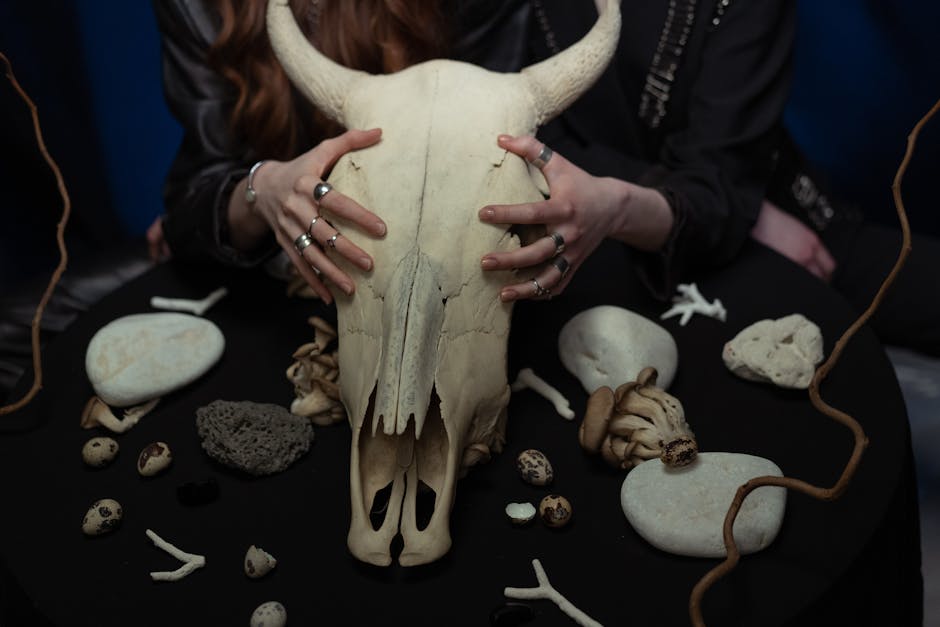
Photo: cottonbro studio / Pexels License
The Hamsa Across Three Faiths
By the first millennium CE, the ancient protective hand had been adopted — and meaningfully reinterpreted — by three major world religions. Each gave it a new name, a theological framework, and a sacred lineage. None abandoned what the symbol had always been.
In Judaism: The Hand of Miriam
In Jewish tradition, the hamsa is called Yad Miriam — the Hand of Miriam — named for the prophetess Miriam, sister of Moses and Aaron. The Torah introduces Miriam as a leader and prophet in her own right: it is she who watches over the infant Moses in his basket on the Nile (Exodus 2:4), and she who leads the Israelite women in song and dance after the crossing of the Sea of Reeds, taking up her timbrel while the community celebrates liberation (Exodus 15:20–21). She is among the seven female prophets recognized in Jewish scripture. To name the protective hand after Miriam is to invoke not merely defense against harm, but prophetic wisdom, communal leadership, and spiritual courage.
In Kabbalistic and Sephardic Jewish communities particularly, the hamsa became a widely used domestic and personal amulet during the medieval period. Sephardic Jews — those with cultural roots in Spain, North Africa, and the broader Mediterranean — lived in sustained cultural contact with Muslim and Berber neighbors who also used the khamsa, and the symbol moved naturally across these boundaries in both directions. As the Jewish Virtual Library documents, the hamsa appears throughout Jewish decorative arts: on North African synagogue ornaments, Mizrahi bridal jewelry, mezuzot cases, and domestic wall hangings. Many examples are inscribed with the Hebrew phrase bli ayin hara — "without the evil eye" — making their protective purpose explicit.
Most people don't know this: some Kabbalistic interpretations hold that the hamsa's five fingers map onto the five letters of the divine name Elohim (אֱלֹהִים), one of the primary names for God in the Hebrew scriptures. Under this reading, the symbol is not simply folk magic but a portable inscription of the divine name carried on the body — a mezuzah for the hand.
In Islam: The Hand of Fatima
In Islamic tradition, the symbol is most commonly called the Khamsa or Khamsa Fatima — the Hand of Fatima — named for Fatima al-Zahra bint Muhammad, daughter of the Prophet Muhammad and wife of Ali ibn Abi Talib. Fatima holds extraordinary significance across Islamic tradition, venerated in both Sunni and Shia communities as a model of virtue, patience, and devotion. The Prophet Muhammad's own words about her — recorded in Sahih al-Bukhari (Book 57, Hadith 110) — reflect the depth of her standing:
"Fatima is a part of me, and whoever makes her angry makes me angry." — The Prophet Muhammad, recorded in Sahih al-Bukhari
The association of Fatima's name with the protective hand reflects the cultural belief that her qualities of endurance, fidelity, and spiritual strength were themselves a form of protection — that to invoke her was to place oneself under a particular kind of divine guardianship.
It is worth noting — and most people don't know this — that classical Islamic scholarship has never reached unanimous consensus on the permissibility of wearing amulets and talismans. Some scholars permit objects inscribed with Quranic verses, treating them as a form of carried prayer. Others discourage material reliance on any object, arguing that trust should rest in God alone and not in a physical charm. This ongoing theological conversation reflects Islam's serious engagement with the boundary between faith and superstition — and explains why hamsa jewelry carries different weight in different Muslim communities. In Morocco, Egypt, and Tunisia, hamsa amulets are woven into everyday life and ceremony. In other contexts, the same symbol would be viewed with greater suspicion.
In Christianity: The Hand of Mary
The hamsa's relationship with Christianity is the least widely known of the three connections — and the most historically complex. In certain Christian communities, particularly among Eastern Christians and Catholics in the Middle East and Mediterranean regions, the open hand protective symbol has been associated with the Virgin Mary, called the "Hand of Mary" or "Hand of the Virgin." In this Marian interpretation, the five fingers correspond to the Five Joyful Mysteries of the Rosary.
Additionally, scholars of early Christian iconography have identified a related visual tradition: the manus Dei, or "Hand of God," a motif that appears extensively in Byzantine and Romanesque art — a divine hand extended from the heavens in a gesture of blessing, commissioning, or protection. This is not identical to the hamsa, but it participates in the same ancient iconographic language: the open hand as a conduit of sacred power moving between the divine and the human. When medieval European Christians encountered the hamsa through trade with the Islamic and Jewish worlds, they did not find a foreign symbol. They found a gesture they already knew how to read.
Photo: Amir Fard / Pexels License
The Eye Within the Hand
Of all the hamsa's features, the eye at the center of the palm is the one that most puzzles new wearers. Is it the Evil Eye? The Eye of Horus? Something else?
The eye within the hamsa is specifically a counter-Evil Eye symbol. In the cosmology shared by cultures across the Mediterranean and Middle East — described extensively by ethnographers and anthropologists studying the region — the Evil Eye (ayin hara in Hebrew, al-ayn in Arabic, nazar in Turkish and Greek) is the belief that envy and malice can cause harm through a look. It is not a metaphor in these traditions. It is treated as a real mechanism of harm — the reason misfortune follows a compliment, why a beautiful child should not be praised without protective measures, why the new car shouldn't be shown off without precautions.
The eye painted or carved on the hamsa is not the Evil Eye. It is the watching eye: protective, alert, and outward-facing. It sees danger coming before it strikes. In the semiotic logic of amulet tradition, the eye fights fire with fire — it meets the gaze of malice and returns it before harm can enter. The hand stops the body; the eye stops the gaze. Together, they form one of the most layered protective amulets in human symbolic history, working simultaneously through gesture, number, and sight.
This is why the combination of hamsa and evil eye in a single piece carries such resonance. For those drawn to both traditions, the Sterling Silver Blue Enamel Evil Eye Necklace captures the classic blue-and-white evil eye iconography that has protected Mediterranean households for centuries — and pairs naturally with hamsa pieces for a layered protective stack.
The Eye of Horus, by contrast, is a distinct Egyptian symbol from a separate tradition — though the Sterling Silver Eye of Horus Necklace connects wearers to that parallel ancient Egyptian belief in the protective power of the divine watchful eye.
Any honest conversation about the hamsa in contemporary jewelry must address the question thoughtful wearers often ask: Is it appropriate to wear this symbol if I don't come from a Jewish or Muslim background?
The historical record offers a more nuanced answer than the question might suggest. The hamsa, as we have seen, predates both Islam and Judaism in its documented forms. It was a Phoenician symbol before it was a Jewish one. It was an older Mesopotamian protective gesture before that. Each faith that claims it adopted the symbol — finding in this ancient human gesture a resonance with their own theological concerns — rather than originating it from nothing. And within those faiths, the hamsa has always crossed boundaries: Sephardic Jewish and North African Muslim communities have shared the symbol, gifted it at weddings, placed it in each other's homes, without the exchange being treated as transgression.
What scholars and practitioners consistently emphasize is not prohibition but intention. Wearing a hamsa with genuine understanding of its depth — knowing what Fatima and Miriam represent, understanding the Phoenician roots, recognizing the evil eye cosmology it speaks to — is an act of engagement that honors the symbol's complexity rather than flattening it. This is why knowing the hamsa's history matters. It transforms an accessory into a conversation across millennia.
How to Choose Hamsa Hand Jewelry
If you are drawn to the hamsa as a personal talisman or a piece of meaningful jewelry, several considerations help you find something that will carry real weight — aesthetically and symbolically — for years.
Direction: Up or Down?
Hamsa jewelry is made with the hand oriented either upward (fingers pointing toward the sky) or downward (fingers pointing toward the earth), and across the cultures that use the symbol, these orientations carry different associated meanings. The upward-facing hamsa — the raised palm confronting whatever approaches — is understood as more actively protective, a direct gesture of warding. The downward-facing hamsa, with fingers together and pointing down, is associated with drawing in good fortune, abundance, and positive energy. Think of it as the difference between raising a shield and opening a hand to receive a gift.
Both orientations appear in historical examples from across cultures and centuries. Neither is more authentically "correct." Choose based on your own intention for the piece: protection, invitation, or both.
Material: Why Sterling Silver Has Always Been the Traditional Choice
Sterling silver has been the primary material for hamsa amulets across Mediterranean cultures for centuries — accessible enough to be widely owned, durable enough to be passed through generations, and associated in many folk traditions with lunar and protective qualities (silver's reflective surface was thought to mirror and deflect harmful forces). A well-made sterling silver hamsa should have clean, crisp edges, consistent finish, and hardware — clasps, jump rings, bails — designed for daily wear over years, not months.
The Hamsa — Sterling Silver Necklace with Diamond exemplifies this tradition at its finest: handcrafted in solid sterling silver with a natural diamond accent at the center of the palm, where the protective eye would be. The diamond's scattering of light is not decorative coincidence — in the iconographic language of protective jewelry, light deflects darkness. This is a piece designed to be worn every day, not kept for occasions.
Each form of hamsa jewelry carries different proximity to the body, and in traditional amulet logic, proximity matters. A pendant worn close to the heart places the hamsa in a position of central guardianship. A ring, placed on the hand itself, puts the symbol precisely where the protective gesture originates — your own palm becomes the hamsa.
The Sterling Silver Natural Diamond Hamsa Ring places the symbol exactly where the gesture lives. For those who prefer to layer intentions across multiple pieces, the Sterling Silver Hamsa Stackable Ring pairs beautifully with other meaningful bands — a trinity knot, an evil eye, a birthstone — building a personal symbolic vocabulary worn on the hand.
Earrings keep the hamsa close to the face — which in traditional amulet thinking was considered particularly significant, placing the watchful eye near the most vulnerable point: the wearer's own gaze, which meets the world first. Sterling Silver Hamsa Earrings offer this proximity with a clean, everyday-wearable design.
The hamsa reads well at every scale. A smaller piece — like The Hamsa — Sterling Silver Diamond Charm — works as a quiet personal talisman, something you know is there without announcing it to everyone in the room. It layers naturally with other necklaces, its meaning held close and private. A larger, more substantial piece becomes the centerpiece of a look and invites the conversation this article has tried to provide.
For a piece that combines the hamsa's protective symbolism with additional layers of meaning, the Sterling Silver Hamsa Tarot Pendant Necklace brings together the protective hand with esoteric imagery drawn from Western occult tradition — a reminder that the human search for protection through symbol has never been confined to any single system of thought. The full range of hamsa and protective pieces can be explored in the Protective Talismans collection.
Traditional hamsa amulets across Mediterranean cultures frequently incorporated blue stones — turquoise, lapis lazuli, and later blue glass or enamel. Blue was considered the color most protective against the Evil Eye across ancient Near Eastern, Mediterranean, and Islamic cultures. (This is also why the classic nazar amulet is a blue eye, not any other color.) When choosing a hamsa with stone accents, a blue stone honors this centuries-old tradition and adds a layer of color symbolism to the piece's protective intention.
Frequently Asked Questions About the Hamsa Hand
What does the hamsa hand mean?
The hamsa is an open hand symbol used as a protective amulet across Jewish, Islamic, and other Mediterranean and Middle Eastern cultures. Its name derives from the Semitic root for "five," referring to the five fingers. The symbol is believed to protect against the Evil Eye — harmful energy generated by envy or malice — and to bring good fortune to its wearer. Its documented history stretches back at least 3,000 years, to Phoenician Carthage and ancient Mesopotamia, predating both Islam and modern Judaism in its earliest known forms.
What is the difference between the hamsa and the Hand of Fatima?
They are the same symbol with different names derived from different cultural contexts. "Hand of Fatima" (Khamsa Fatima) is the name used primarily in Muslim communities, honoring Fatima al-Zahra, daughter of the Prophet Muhammad. "Hamsa" is a broader, more cross-cultural term. In Jewish communities, the same symbol is often called the "Hand of Miriam" (Yad Miriam), after the prophetess and sister of Moses. All these names describe the same protective open-hand amulet with the same fundamental purpose.
What does the eye in the hamsa mean?
The eye in the center of the hamsa is a watchful, protective eye specifically designed to counter the Evil Eye — the harmful gaze believed across Mediterranean and Middle Eastern cultures to cause harm through envy or malice. The eye within the hamsa is not itself malevolent; it is a guard that sees danger approaching and deflects it before harm can enter. It combines two of the most ancient protective symbols in the ancient world — the raised hand and the watchful eye — into a single, layered amulet.
Is it appropriate to wear a hamsa if I'm not Jewish or Muslim?
The hamsa predates both Islam and Judaism in its documented archaeological forms — its roots lie in Phoenician and ancient Mesopotamian cultures. Throughout its long history, the symbol has been shared freely across religious and cultural lines; Jewish and Muslim communities in North Africa and the Middle East have historically gifted hamsa amulets to one another without controversy. Most scholars and practitioners emphasize that wearing the hamsa with genuine understanding of and respect for its meaning — rather than treating it as a meaningless decorative motif — is what matters most.
What does the hamsa mean in Christianity?
The hamsa is less central to Christian practice than to Jewish or Islamic tradition, but it appears in some Christian communities — particularly in the Middle East and Mediterranean regions — as the "Hand of Mary" or "Hand of the Virgin." Some practitioners associate its five fingers with the Five Joyful Mysteries of the Rosary. Additionally, the related manus Dei ("Hand of God") motif in Byzantine and Romanesque art participates in the same iconographic tradition of the open hand as a vehicle of divine protection.
Which direction should the hamsa face?
Both orientations appear in historical examples and carry different associations. The upward-facing hamsa (fingers pointing up) is understood as actively protective — a raised palm warding off harm. The downward-facing hamsa (fingers pointing down) is associated with welcoming good fortune and drawing in positive energy. Neither is more historically "correct." The choice is personal, guided by your intention for the piece.
Can a hamsa and an evil eye be worn together?
Yes — and this combination has direct historical precedent. Many traditional hamsa amulets incorporate an evil eye at the center of the palm, combining both symbols' protective power in a single piece. Wearing both separately as layered jewelry is equally meaningful: the evil eye watches and deflects harmful attention, while the hamsa's raised hand actively wards it away. Together, they represent one of the oldest and most cross-cultural approaches to protective adornment the world has produced.
A Symbol That Has Always Crossed Borders
What the hamsa's full history reveals — tracing back through Kabbalistic manuscripts and Quranic commentary, through medieval North African synagogues and Andalusian mosques, through Phoenician trading ships and Babylonian temple precincts — is that this symbol has never truly belonged to any single people. It has always traveled. It has always been shared, adopted, renamed, and carried forward by whoever found in the gesture of an open hand a language they already understood.
The Phoenician merchants who carved it onto votives in Carthage were protecting their households. The Sephardic women who hung it above their doorways in Fez were protecting their families. The Muslim brides who wore it on their wedding day in Tunis were protecting their new lives. The teenagers who wear it today as a necklace layered with other meaningful pieces are, whether they know it or not, participating in the longest-running symbolic conversation in the history of human jewelry.
Wearing the hamsa with knowledge of that conversation is what transforms it from a charm into something richer: a declaration that you move through the world with intention, with awareness, and with the protection of every hand that reached out before yours. Intention, made tangible.