

Protective Jewelry: A Buyer's Guide to Symbols of Protection
Almost every culture, working independently, arrived at the same idea: a small object worn on the body to push back against the bad stuff. The symbols differ. The impulse is identical — and once you know what to look for, choosing a protective piece becomes much less mysterious.
This is a practical guide. We'll cover the symbols that have stayed in continuous use the longest, what makes a well-made version of each, and how to actually wear protection so it works in your wardrobe instead of feeling like a costume. The goal isn't a history lesson — it's helping you pick a piece you'll reach for every day.
The Symbols That Keep Showing Up
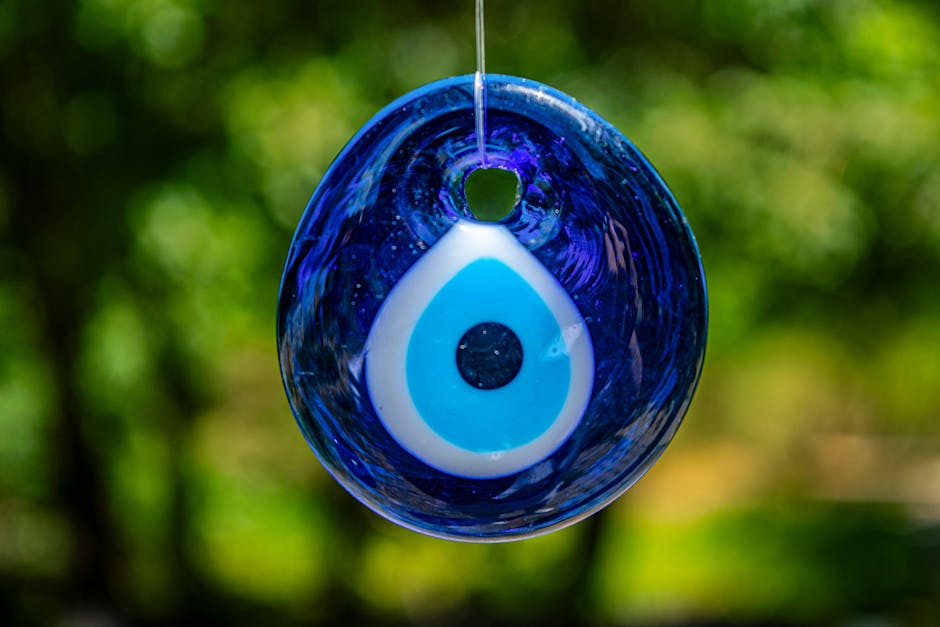
Glass eye beads in cobalt blue. A hand with an eye in the palm. A looped cross. A heart held by two hands and crowned. A sky-blue stone with copper veins. These are the protective motifs that keep reappearing across thousands of miles and thousands of years — and the reason isn't mystical. They share two visual qualities that make them effective as worn objects: they're specific enough to be recognized at a glance, and compact enough to live near the throat, wrist, or finger without competing with everything else you wear.
Most people don't know this: the cobalt blue of the classic nazar bead isn't symbolic, it's chemical. Glass blown with cobalt oxide produces that exact saturated blue, and the technique has been continuous in the eastern Mediterranean since at least the late Bronze Age. The British Museum holds eye beads from across the ancient world that look strikingly like the ones still made in Turkish workshops today.
If you want a modern, wearable version of that bead in fine metal, the Sterling Silver Aquamarine & White Sapphire Evil Eye Necklace swaps glass for natural aquamarine — same blue family, but a stone rather than a bead. It reads as a piece of fine jewelry first and a symbol second, which is what most people actually want from an everyday talisman.

The hamsa — a stylized hand, often with an eye in the center of the palm — appears in artifacts from ancient Mesopotamia onward and remains one of the most recognizable protective shapes worldwide. The geometry is what gives it staying power: five fingers in symmetrical proportion read instantly as a hand, even when reduced to a tiny pendant. The Hamsa Sterling Silver Necklace with Diamond keeps the silhouette clean and small enough to layer without crowding other pieces.

The Eye of Horus — also called the wedjat — comes out of ancient Egyptian art, where it represented healing, restoration, and wholeness. The shape is essentially a stylized falcon's eye, with a teardrop and a curl beneath the brow. The Metropolitan Museum of Art has wedjat amulets in its Egyptian collection that span more than a thousand years of nearly identical design — proof of how stable the symbol has been. Modern versions like the Sterling Silver Eye of Horus Necklace reproduce that exact silhouette in a scale that works under a shirt collar.


What Makes a Protective Piece Worth Buying
The market is flooded with cheap charm jewelry stamped with these symbols. Most of it falls apart in a season. A protective piece you'll actually keep wearing has to clear three bars: the symbol has to be rendered correctly, the metal has to hold up, and the proportions have to fit your existing wardrobe.
The Symbol Has to Be Drawn Right
This is the part most mass-market pieces get wrong. A hamsa with fingers of unequal length looks like a generic hand, not a hamsa. An evil eye with the wrong concentric ring spacing reads as a flower, not an eye. The Eye of Horus has a very specific teardrop and curl — get those proportions wrong and it becomes generic eye art. Hold the piece at arm's length. If you can identify the symbol in two seconds, the design is doing its job.
The Metal Has to Survive Daily Wear
Plated brass and stamped pot metal are the most common materials in low-cost amulet jewelry, and they're also the worst choice for something you intend to wear every day. The plating wears off the high points within months — usually right at the most visible part of the symbol — and the base metal underneath turns gray-green where it touches skin.
Sterling silver (92.5% pure silver) is the practical sweet spot for protective pieces. It's durable, holds detail well in small pieces, polishes back to bright when it tarnishes, and stays affordable enough that you can build a small collection rather than agonizing over a single piece. According to the GIA, properly cared-for sterling silver lasts essentially indefinitely — meaning the protective piece you buy now is the one your daughter inherits.
The Proportions Have to Fit Your Life
A pendant the size of a quarter is not subtle. A pendant the size of a fingernail is. Most people who say they "can't pull off symbol jewelry" have only tried oversized versions. Scaled-down protective pieces — small studs, slim rings, pendants under 15mm — read as personal jewelry rather than statement pieces, and they integrate naturally with whatever else you wear.
The Five Symbols Worth Knowing Before You Shop
If you're new to protective jewelry, these are the five forms most worth understanding. Each has clear visual identity, deep continuity of use, and modern interpretations that work in everyday wardrobes.
1. The Evil Eye / Nazar
Concentric circles in cobalt blue, white, and black, often pointed or almond-shaped. The most widely worn protective symbol in the world. The form has been continuous around the eastern Mediterranean since the Bronze Age. For everyday wear, the Sterling Silver Diamond Evil Eye Stud Earrings are the lowest-friction entry point — small enough to wear with everything, sparkly enough to register as fine jewelry rather than a charm.

2. The Hamsa
A symmetrical five-fingered hand, often with an eye in the palm. Strong silhouette, instantly readable. The diamond-set version above adds a single point of light at the eye — a small detail that lifts the piece from "symbolic" to "jewelry that happens to be symbolic."
3. The Eye of Horus
The stylized falcon's eye from ancient Egyptian art. Distinctive enough to be unmistakable, refined enough to look like a graphic design rather than a pictograph. The Sterling Silver Natural Turquoise & Diamond Eye of Horus Necklace incorporates turquoise — the stone the Egyptians actually used in their original wedjat amulets, mined in the Sinai Peninsula starting around 5,000 years ago, according to the Smithsonian.

4. The Eye of Providence
A single eye inside a triangle, sometimes radiating light. The version most familiar to Western eyes — though it appears in art going back centuries before the United States adopted it onto the dollar bill. The Sterling Silver Natural Diamond Eye of Providence Necklace uses a tiny diamond at the pupil, which is the kind of detail that elevates a symbolic piece into something you'd wear to dinner.

5. The Claddagh
Two hands holding a crowned heart. Originating in the Irish fishing village of Claddagh outside Galway in the 17th century, it's worn as a token of friendship, love, or protection of the bond between two people. The Claddagh Ring with Garnet in Sterling Silver sets a small garnet inside the crowned heart — the same red stone that medieval European travelers carried as a protective talisman because they believed it lit the way home in the dark.

If you want to see how these forms vary across pieces, the full Boundaries (Protective Talismans) collection collects them in one place — useful for comparing scale and finish before you commit to a particular piece.

How to Wear Protection Without It Looking Like a Costume
The single most common mistake with protective jewelry is wearing it the way a museum would display it — large, isolated, and front-and-center. That's how a piece reads as literal. Here's how to wear it so it reads as personal.
Layer the Symbol With Plain Pieces
One protective pendant on a chain, paired with one or two plain chains of different lengths, is the formula that almost always works. The plain chains anchor the protective piece in your overall jewelry vocabulary so it doesn't shout. A 16" chain with the protective pendant at the collarbone, plus a 20" plain rope or box chain hanging just below it, is a layered look that's easy to wear daily.
Match Symbol Scale to Frame
If you're under 5'4", pendants should generally sit at or above the collarbone and stay under 15mm at the widest point. Above 5'8", you can run pendants longer and slightly larger without losing proportion. The studs and small pendants in protective collections are usually the easiest to scale across body types — they read as detail rather than statement.
Stack Rings Instead of Wearing One Big One
A single oversized symbol ring rarely looks intentional. Two or three slim bands — one with a symbol, two plain — stack naturally and turn the symbol into part of a larger composition. Most people own at least one plain band already; adding a symbolic ring to that stack is a much lower-stakes way to incorporate protection than buying a chunky cocktail ring.
Earrings Are the Easiest Entry
Studs are the most flexible form for any symbol-based jewelry. They sit at the most visible point on the body — the face — but they're small enough that the symbol reads as detail rather than declaration. If you've never worn protective jewelry before and aren't sure how it will feel, start with studs. They're the quickest way to find out whether the symbol fits your daily wardrobe.
Care: How to Make a Protective Piece Last 20 Years
The shortest version: take it off before water and chemicals, store it dry, polish it before tarnish gets thick. The slightly longer version is worth knowing because protective jewelry, more than most categories, is meant to be kept and passed down rather than replaced.
Sterling silver tarnishes when it reacts with sulfur compounds in the air, lotions, perfumes, and certain foods. Tarnish is cosmetic, not damage — silver doesn't actually corrode the way iron rusts. A polishing cloth (not toothpaste, not aluminum foil and baking soda for a fine piece, not commercial dips for anything with set stones) restores the surface. Store pieces in anti-tarnish bags or with a small piece of chalk in the box to absorb moisture.
Take pieces off before showering, swimming, working out, or applying lotion. Chlorine and salt water are the two fastest things that will degrade settings and stones. The GIA notes that turquoise in particular is porous and absorbs oils and chemicals — meaning a turquoise piece worn through a hand-cream application will gradually shift color. Wipe it down after each wear and it stays bright.
Frequently Asked Questions
Do you have to believe in the protection for the jewelry to feel meaningful?
No. Most people who wear these symbols today wear them as a kind of personal mark — a daily object that means something specific to the wearer. Whether that meaning is metaphorical or more than that is up to you. The piece itself doesn't care.
Can you wear more than one protective symbol at a time?
Yes — and many people do. The visual logic is the same as mixing any jewelry: vary the scale and let one piece be the anchor. An evil eye stud earring plus a hamsa pendant, for instance, reads as a coordinated set rather than a competition.
Is it appropriate to wear a symbol from a culture you weren't raised in?
Most of these symbols — evil eye, hamsa, Eye of Horus, Claddagh — have circulated across cultural lines for so many centuries that they belong to the global jewelry vocabulary now. The respectful approach is to know what the symbol means and wear it with intention rather than as decoration. If you can answer the question "why are you wearing that?" with a real answer, you're fine.
What's the difference between an amulet and a talisman?
Loosely: an amulet is meant to deflect harm; a talisman is meant to attract a positive outcome. In practice the two terms are used interchangeably in the jewelry world.
Why is so much protective jewelry made in silver rather than gold?
Cultural and practical reasons stack on top of each other. Silver has a long association with protective traditions across the Mediterranean, the Middle East, and Mesoamerica — partly because it was the most accessible precious metal in those regions and partly because of its bright reflective surface. It also takes fine detail well at small scale, which matters for symbol-based design.
How small is too small for a protective pendant?
For most people, around 8mm at the widest point is the lower bound where the symbol still reads clearly. Below that, the eye stops registering the shape and the piece becomes generic. Studs can go smaller because they're seen at close range against skin.
Do these pieces work as gifts?
Some of the best gift jewelry, actually. A protective piece given by someone else carries an extra layer of meaning that a self-purchased piece doesn't have. Evil eye and hamsa pieces are especially common as gifts for new babies, graduates, people starting new chapters, and anyone going through a hard stretch.
Choosing With Intention
Protective jewelry has the longest continuous run of any category in human adornment. The reason isn't mystical — it's that a small, beautiful object you choose to wear every day quietly does something useful. It marks the body. It signals to you and to other people what you care about. And every time you put it on, you're making a small daily decision about what to keep close.
Pick a symbol that means something specific to you. Buy it in a metal that lasts. Wear it at a scale that fits your wardrobe. That's most of what there is to know — the rest is finding the piece that you'll actually reach for in the morning.


