The Complete Guide to Aquamarine: March's Birthstone
Share
Most people born in March know one birthstone: aquamarine. Few know there is a second — bloodstone — that was considered the primary March birthstone for over 1,800 years before the modern list was standardized.
The current official list wasn’t established until 1912, when the American National Retail Jewelers Association (now Jewelers of America) published a standardized chart. Before that, bloodstone held the top spot, inherited from gemological traditions dating back to the Roman Empire.
If you were born in March, you have a choice. This guide covers both stones — their geology, history, meaning, and the differences that matter when choosing jewelry.
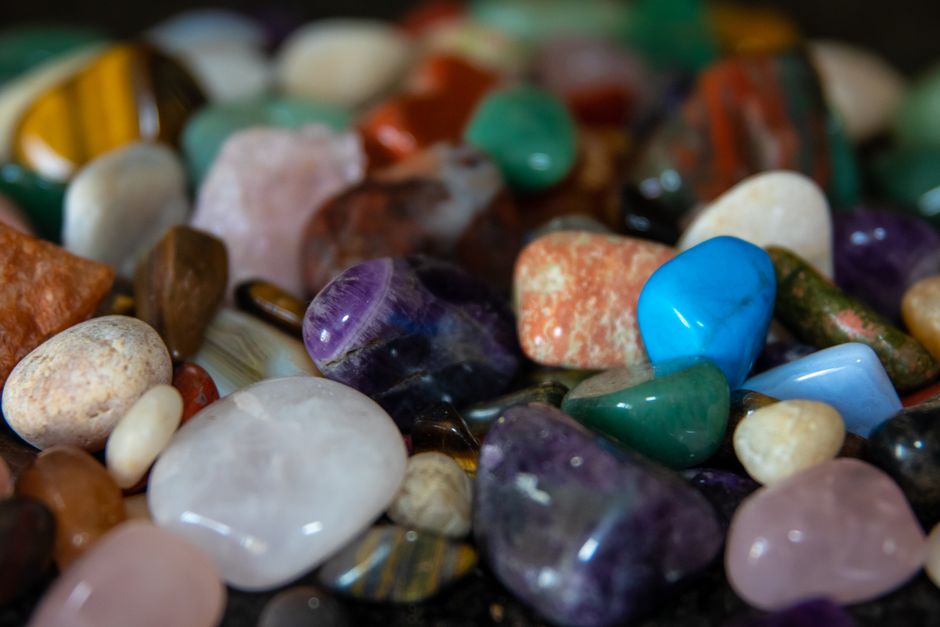
Photo: Magda Ehlers / Pexels License
What Are March’s Two Birthstones?
Aquamarine is a blue to blue-green variety of the mineral beryl (Be₃Al₂(SiO₃)₆). Its color comes from trace amounts of iron and ranges from pale sky blue to deep sea blue-green. Mohs hardness: 7.5–8.
Bloodstone (also called heliotrope) is a dark green variety of chalcedony (microcrystalline quartz, SiO₂), spotted with vivid red or orange flecks of iron oxide. Mohs hardness: 6.5–7.
They could not look more different. One evokes the open ocean at noon; the other, a deep forest floor after rain. Both have been worn as protective talismans for thousands of years.
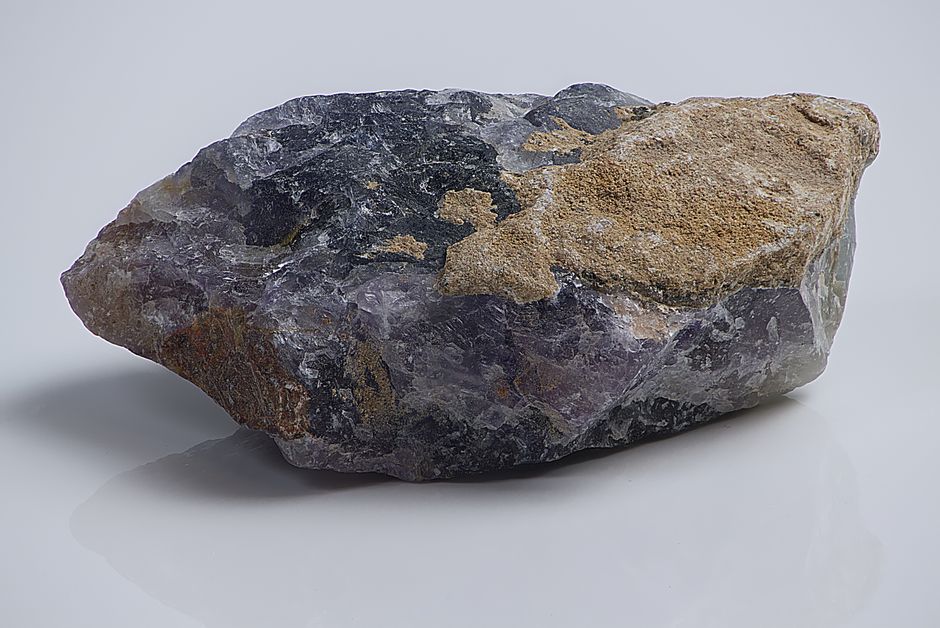
Photo: Peter Döpper / Pexels License
Aquamarine: The Stone of the Sea
Geology and Properties
Aquamarine forms in pegmatite veins deep within the Earth’s crust, often alongside tourmaline, topaz, and other beryls including emerald. The same mineral family that produces the most prized green gemstone also produces this blue one.
Its color is caused by iron ions substituting into the crystal lattice during formation. The most valued aquamarines are a rich, medium-dark blue — a color sometimes called “Santa Maria” after the Minas Gerais mine in Brazil that produces exceptional specimens. The Gemological Institute of America notes that most commercial aquamarine is heat-treated to reduce the greenish component and enhance pure blue.
Brazil is the world’s dominant source, but significant deposits also come from Pakistan’s Karakoram mountains, Zambia, Madagascar, and Russia’s Ural mountains. The largest faceted aquamarine ever cut — the Dom Pedro, at 10,363 carats — is on permanent display at the Smithsonian’s National Museum of Natural History.
History and Lore
The name comes directly from Latin: aqua marina, “sea water.” Roman sailors carved aquamarine amulets with images of Neptune, the sea god, and wore them as protection against storms and shipwreck. The tradition is documented in Pliny the Elder’s Natural History, available through the Perseus Digital Library at Tufts University.
Ancient Egyptians, Greeks, and Romans also believed aquamarine enhanced the clarity of the mind and the honesty of speech. It was considered an ideal stone for oaths and legal proceedings — its transparent blue was associated with truth.
In the Middle Ages, aquamarine was believed to be the treasure of mermaids. Medieval lapidaries (gemstone reference books) described it as a cure for laziness, procrastination, and cowardice — stones given to soldiers before battle to steady their nerves.
Today, aquamarine is strongly associated with courage, clarity, and calm communication. It remains one of the most universally wearable gemstones, its blue tones complementing virtually every skin tone and metal color.
Photo: The Glorious Studio / Pexels License
Bloodstone: The Forgotten Birthstone
Geology and Properties
Bloodstone is not as exotic as it sounds. It is a form of chalcedony — the same mineral family as agate, jasper, and onyx — colored deep green by microscopic inclusions of chlorite and hornblende minerals. The characteristic red spots come from iron oxide (hematite or red jasper) distributed through the stone.
No two bloodstones look alike. Some have a few scattered red flecks. Others are almost entirely covered in red patterning. The most prized specimens show vivid, clearly defined spots against a deeply saturated green ground — a combination that has made the stone a favorite of gem carvers for over two thousand years.
India has been the primary source of bloodstone for centuries, producing stones used in carving, beadwork, and signet rings. Deposits also exist in Australia, Brazil, China, and the western United States. The GIA’s bloodstone reference documents its mineralogy and identification characteristics in detail.
History and Lore: 2,000 Years of Sacred Use
Bloodstone may be the most historically significant gemstone most people have never heard of.
Pliny the Elder called it heliotrope — Greek for “sun-turning” — based on the ancient belief that the stone would turn the reflection of the sun blood-red when submerged in water. He described it in Natural History, Book 37, as one of the most remarkable stones known to the ancient world.
In early Christian tradition, bloodstone became deeply sacred. Legend held that the red spots were drops of Christ’s blood that fell onto dark green earth at the crucifixion, staining the stone forever. This tradition made bloodstone the preferred material for medieval religious carvings — crosses, seals, and depictions of the Passion.
The Louvre Museum holds some of the finest examples of medieval bloodstone carving in the world, including religious seals and intaglios that were among the most valuable objects in European treasuries. The stone’s deep green background carved magnificently, and its hardness allowed for extraordinary fine detail.
In Indian Ayurvedic medicine, bloodstone has been used for over 1,500 years as a stone associated with blood, vitality, and physical endurance. Sanskrit texts describe it as strengthening to the heart and purifying to the blood — associations that followed naturally from its appearance.
Most people don’t realize that bloodstone was the most common material for European signet rings and official seals from the Roman period through the Renaissance — not gold, not ruby, not any of the stones we now associate with luxury. Its hardness made it ideal for engraving, and its dark color made wax impressions sharp and legible. Every important document in medieval Europe was more likely to be sealed in bloodstone than any other gemstone.
Aquamarine vs. Bloodstone: Understanding the Difference
Both stones have protective traditions. But they carry very different symbolic energy, and the right choice depends on what resonates with you.
Choose aquamarine if you are drawn to clarity, communication, and calm. Aquamarine has been associated for millennia with the sea, with travel, with honest speech, and with the kind of courage that comes from a clear mind. It is the lighter stone in every sense — in color, in weight of symbolism, in the way it sits on the skin.
Choose bloodstone if you are drawn to strength, endurance, and groundedness. It is a warrior’s stone, a healer’s stone, a stone with 2,000 years of use in sacred contexts. It makes a striking alternative for anyone who wants a birthstone that carries history most people don’t know.
Both stones are durable enough for daily wear. Aquamarine’s higher Mohs hardness (7.5–8) gives it a slight edge in scratch resistance. Bloodstone at 6.5–7 is still harder than most household surfaces but benefits from occasional protective care.
March Birthstone Jewelry: What to Look For
Aquamarine Quality Guide
Color is the most important value factor in aquamarine. The finest stones are a medium-dark, pure blue with no visible inclusions. Pale, washed-out stones are common and significantly less valuable.
Most aquamarine on the market has been heat-treated. This is a stable, permanent, industry-accepted treatment that improves color. Unlike some gemstone treatments, aquamarine heat treatment does not require ongoing care precautions — treated stones behave identically to untreated ones.
Always ask whether a stone is natural (mined) or synthetic (lab-created). Lab-created aquamarine is chemically identical but significantly less valuable and less meaningful as a birthstone or heirloom piece.
The Cancer Zodiac Disc Necklace with Natural Aquamarine in 14K Gold uses a natural aquamarine stone set in solid 14K gold — a meaningful choice for a Cancer born in late June, or as a March birthstone gift that connects the wearer’s sign and birth month. Cancer’s ruling element is water, which shares aquamarine’s core symbolism.
Aquamarine’s historical role as a protective stone — specifically guarding against harm during travel and enabling clear communication — makes it a natural choice for protective jewelry beyond the zodiac context.
The Aquamarine and White Sapphire Evil Eye Necklace in Sterling Silver layers two protective traditions: the evil eye symbol (5,000 years of cross-cultural protective use) with aquamarine’s own long history as a guardian stone. The blue-and-white color combination mirrors the traditional evil eye palette.
For a coordinated set, the matching Evil Eye Ring and Evil Eye Stud Earrings complete the look with the same aquamarine and white sapphire combination. Wearing the full set creates a cohesive, intentional look grounded in ancient protective symbolism.
Aquamarine is an excellent everyday stone. Its hardness protects it from most scratches, and it requires only routine care: warm soapy water and a soft brush to remove accumulated oils. Avoid ultrasonic cleaners if the stone has visible fractures, and store separately from harder stones like diamonds (Mohs 10) that could scratch it.
Bloodstone is slightly softer but still durable for daily wear. Clean with mild soap and water only — avoid harsh chemicals that can dull the stone’s natural polish. Bloodstone benefits from periodic re-polishing if it becomes dull from daily contact.
Both stones should be removed before swimming in chlorinated pools, as chlorine can damage metal settings over time.
For aquamarine in ring form, the March Birthstone Ring with Aquamarine in 14K Gold is built for daily wear — a bezel setting protects the stone's perimeter from impact, and aquamarine's Mohs 7.5 to 8 hardness handles the contact a ring typically takes on the hand.
Frequently Asked Questions About March Birthstones
What is the birthstone for March?
March has two birthstones: aquamarine and bloodstone. Aquamarine is the modern primary birthstone, officially designated in 1912 by the American National Retail Jewelers Association. Bloodstone is the traditional birthstone, derived from a gemological tradition that dates to at least the first century CE. Both are recognized by major gemological authorities including the Gemological Institute of America.
What color is the March birthstone?
Aquamarine ranges from pale sky blue to medium blue-green — the color of clear tropical seawater. Bloodstone is deep forest green with vivid red or orange spots of iron oxide. Aquamarine is by far the more common choice for March birthstone jewelry, but bloodstone’s dramatic green-and-red coloring is genuinely striking and historically significant.
What is bloodstone meaning?
Bloodstone has been associated with vitality, courage, endurance, and protection for over 2,000 years across Roman, Christian, and Indian Ayurvedic traditions. Its red spots were interpreted in early Christianity as drops of Christ’s blood, making it a sacred stone for religious devotion. In martial traditions, it was associated with physical strength and bravery in battle. Today it is primarily associated with grounding energy, physical vitality, and protection.
Is aquamarine the birthstone for all of March?
Yes. Unlike some months where the birthstone changes by zodiac sign or specific date, aquamarine is the birthstone for the entire month of March — whether you are born on March 1 or March 31. The zodiac signs that fall in March are Pisces (February 19 – March 20) and Aries (March 21 – April 19), which have their own associated stones in astrological traditions, but the calendar birthstone is aquamarine for all of March.
Is aquamarine a good everyday stone?
Yes. With a Mohs hardness of 7.5–8, aquamarine is well-suited to daily wear in all jewelry formats — rings, necklaces, earrings, and bracelets. It is significantly more durable than softer stones like opal (5.5–6.5) or moonstone (6–6.5). Avoid hard impacts and clean regularly with mild soap and water.
What is the difference between aquamarine and blue topaz?
Both are blue gemstones used in birthstone jewelry, but they are mineralogically distinct. Aquamarine is a beryl (Be₃Al₂(SiO₃)₆, Mohs 7.5–8) with a natural pale-to-medium blue color. Blue topaz (Al₂SiO₄(F,OH)₂, Mohs 8) is almost always irradiated to achieve its blue color, as natural blue topaz is extremely rare. Aquamarine tends toward a softer, more muted blue-green; topaz is typically a brighter, more vivid blue. Aquamarine has a longer and richer historical tradition as a protective and symbolic stone.
Why is aquamarine associated with March?
The association dates to the Roman period, when gemstones were linked to months and zodiac signs in a complex system drawing on Babylonian and Greek astrology. Aquamarine was associated with Pisces (the fish, a water sign) partly because of its sea-blue color and its long tradition as a seafarer’s protective stone. When the modern birthstone list codified these associations in 1912, aquamarine was assigned to March. The connection between the stone and the month reinforced a tradition at least 1,500 years old.
Can I wear both aquamarine and bloodstone?
Absolutely. Many people who take their birthstone symbolism seriously choose to wear both — aquamarine for clarity and communication, bloodstone for grounding and vitality. The two stones contrast dramatically in color and character, which makes them interesting to wear as a deliberate pairing. Aquamarine as a necklace and bloodstone as a ring, for instance, layers two distinct protective traditions without visual competition.
March is one of the few months that offers you a genuine choice — two completely different stones, two distinct histories, two separate traditions of meaning.
Aquamarine is the well-known path: serene, beautiful, universally flattering, with a direct line back to Roman sailors and Alexandrian gem carvers. Bloodstone is the less-traveled one: ancient, sacred in ways most people have forgotten, carrying 2,000 years of warrior and healer tradition in its dark green depths.