

How to Buy Jewelry That Lasts a Lifetime
Most jewelry doesn't fail in the stone. It fails in the chain. Or the clasp. Or the plating that looked beautiful for two months before it wore through at the wrist. You've probably owned at least one piece that followed this trajectory — striking on arrival, disappointing six months later. That's not bad luck. It's the difference between jewelry designed to sell and jewelry designed to last.
This guide covers exactly what to look for: how metal quality is stamped and verified, where plated pieces fail first, which settings hold stones long-term and which don't, and why the clasp tells you more about a piece's overall quality than the pendant does. Whether you're buying your first solid gold piece or trying to understand what you already own, these are the things a good jeweler would tell you if you asked the right questions.

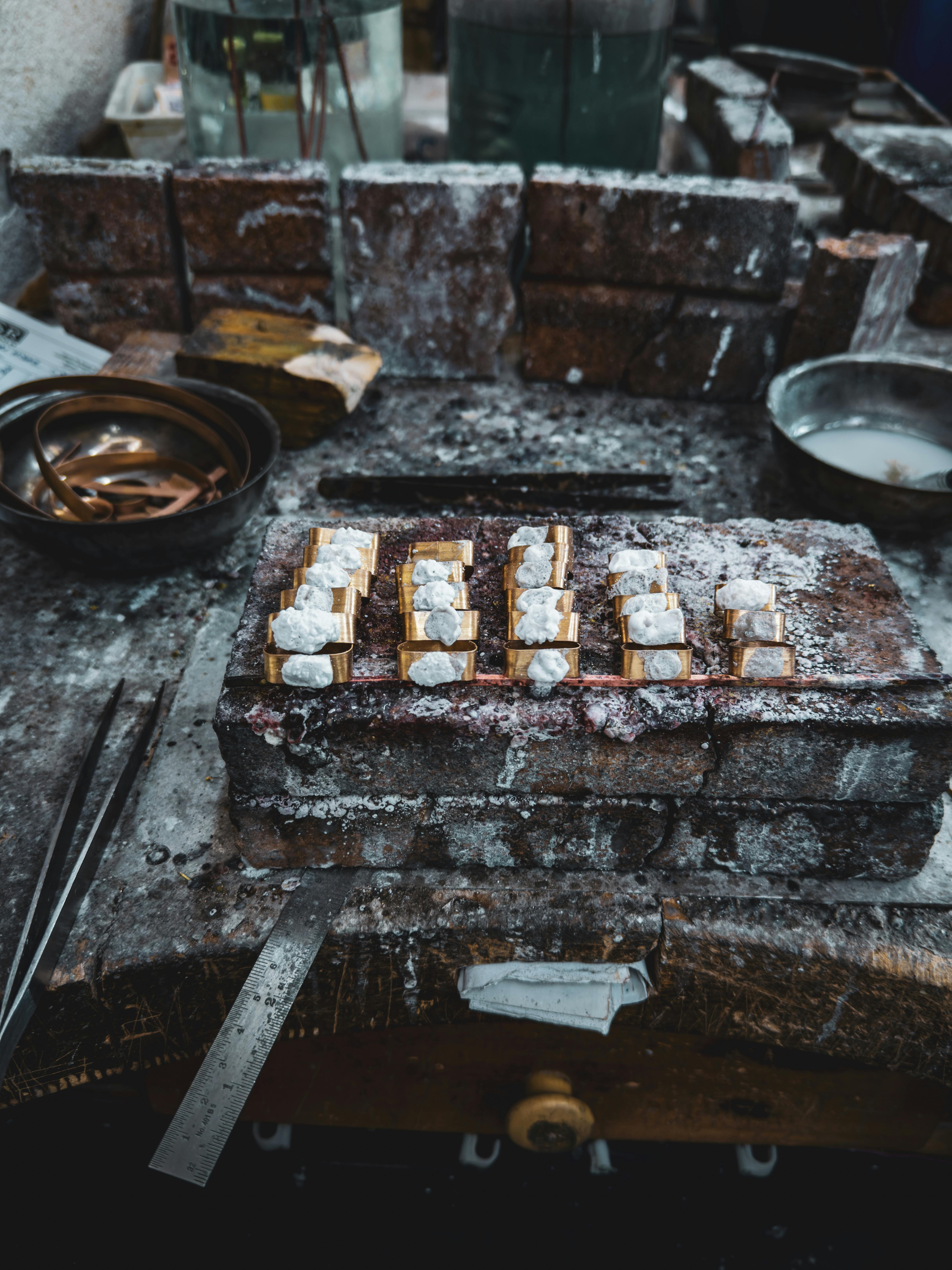
Solid, Hollow, and Plated — Start Here
Metal quality is the foundation everything else is built on. Get this wrong and no other feature matters. Get it right and you're most of the way to buying something that lasts decades.
There are three main categories: solid metal, hollow metal, and plated metal — and they perform very differently over time.
Solid Metal
Solid gold, solid silver, solid platinum means the piece is the same material all the way through. It can be resized, repaired, and polished indefinitely. A solid 14K gold necklace worn and stored with reasonable care will look identical in 30 years. This is the benchmark against which everything else gets measured.
Most people don't know this: 14K gold (58.3% pure gold) is actually harder and more scratch-resistant than 18K or 24K gold precisely because of its higher alloy content. The copper, silver, or zinc added to reach 14K strengthens the metal against bending and everyday impact — a practical advantage that explains why most fine jewelry is made at 14K rather than higher. The Gemological Institute of America notes that different gold alloy compositions also produce the color variations you see in yellow, white, and rose gold pieces — all equally durable at the same karat.
The Diamond Accented Star Necklace in 14K Gold illustrates what this means practically: the 14K gold construction doesn't degrade, the piece can be professionally polished whenever the years show on it, and a prong can be tightened or replaced by any competent jeweler if needed. Same logic applies to the Crescent Moon & Star Necklace in 14K Solid Gold, which ships in yellow, white, or rose gold — different alloy compositions, same solid construction, same durability.


Hollow Metal
Hollow gold looks identical to solid gold from the outside and carries the same karat stamps. The interior is empty, which reduces weight and cost significantly. The tradeoff: hollow pieces dent easily, can't be resized, and when damaged are often impossible to repair cleanly. Hollow chains in particular will crimp and kink in ways solid chains don't recover from. It's a legitimate choice for budget reasons — just know what you're buying.
Gold-Filled and Gold-Plated
Plated means a thin layer of gold is bonded over a base metal (usually brass, copper, or sterling silver). Gold-filled uses a thicker layer bonded mechanically under heat and pressure — it's regulated to contain at least 1/20th of the piece's total weight in gold, which is why the Federal Trade Commission's Jewelry Guides treat it as a distinct category from standard electroplating. Gold-filled lasts significantly longer than plated — often a decade or more with care.
Both will eventually wear through at friction points: wherever a bracelet rests on a wrist, wherever a chain rubs a clasp, wherever a ring meets the skin. With regular wear, quality electroplating lasts one to three years before showing base metal. Gold-filled lasts considerably longer. Solid metal lasts indefinitely.
Sterling silver is its own category — a solid metal (92.5% silver, 7.5% alloy) that tarnishes but doesn't wear through. A piece like The Hamsa — Sterling Silver Necklace with Diamond or the Sterling Silver Natural Diamond Eye of Providence Necklace will maintain its structural integrity indefinitely. Tarnish is a surface reaction — it polishes off — not a sign of the metal breaking down.


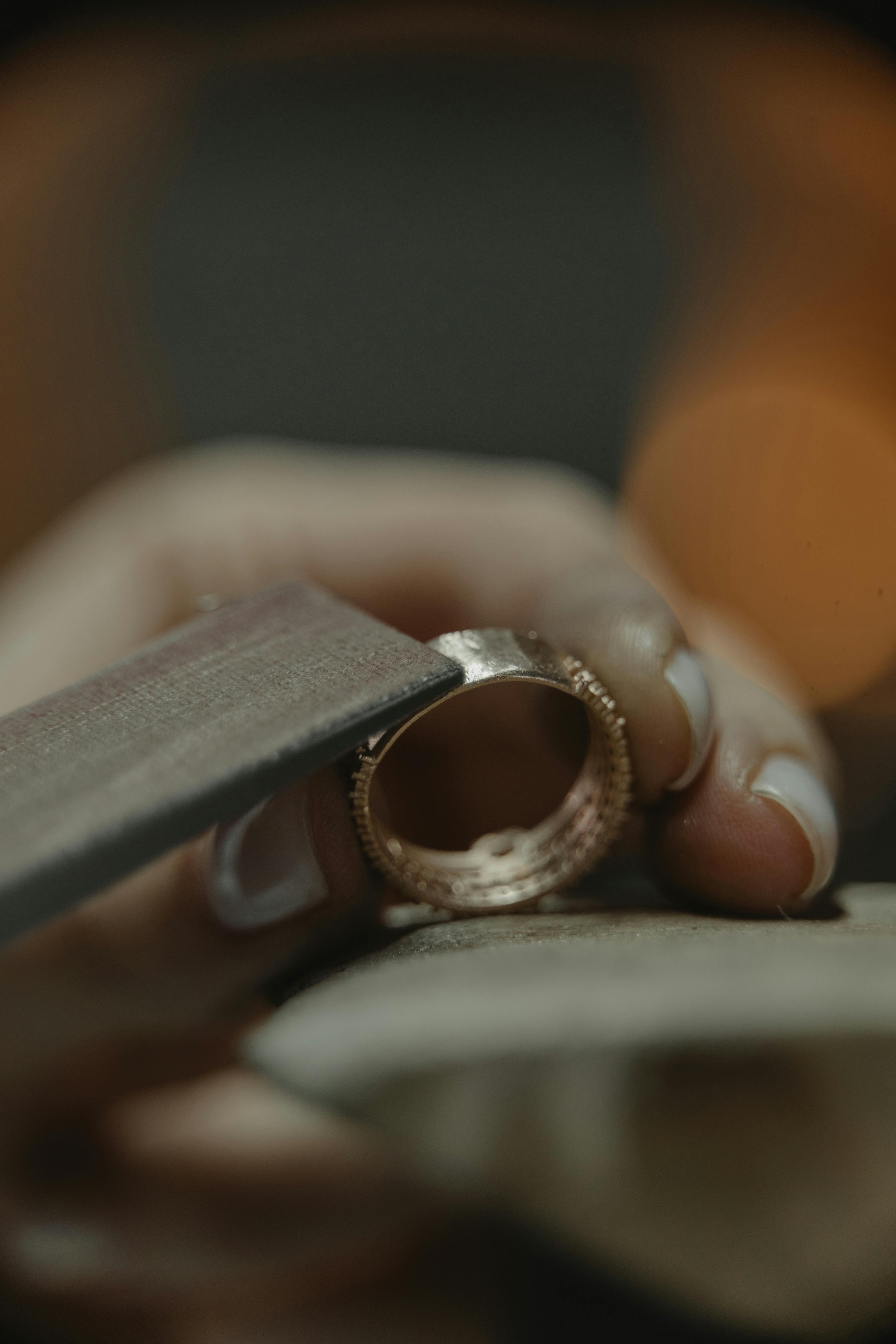
Reading the Stamps: What Hallmarks Actually Tell You
Every piece of legitimate fine jewelry should be stamped. These marks are the vocabulary of quality — once you read them, you can verify any claim about metal content before you hand over money.
Gold Stamps
Gold purity in the US and UK is expressed in karats: 10K (41.7% gold), 14K (58.3%), 18K (75%), 24K (99.9% pure). European jewelry uses millesimal fineness instead: 375 for 10K, 585 for 14K, 750 for 18K. Both systems are legally enforceable in most markets — a piece stamped 14K must be at least 58.3% gold. Stamps are not optional decoration; they are a legal disclosure.
Where to look: the clasp of a necklace or bracelet, the inner shank of a ring, the post of an earring, or the back of a pendant. On pieces smaller than 1 gram, US law allows an exemption from stamping requirements. No stamp on a larger piece is a flag worth investigating before purchase.
Silver Stamps
Sterling silver is stamped .925, STER, or STERLING. Fine silver is .999. Silverplate typically reads EP (electroplated), EPNS (electroplated nickel silver), or has no stamp at all. The .925 mark is the assurance of solid sterling — no stamp means ask before assuming.
Assay and Maker's Marks
In the UK and much of Europe, jewelry must also carry an assay office mark — an independent laboratory verification of metal content, separate from the manufacturer's stamp. The Goldsmiths' Company has administered Britain's hallmarking system since a statute of Edward I in 1300 — making it one of the oldest consumer protection regulations in the world. The term "hallmark" itself derives from Goldsmiths' Hall in London, where pieces were brought for testing beginning in 1478.
The practical takeaway: always find the stamp. If a seller can't point you to where it is on a piece they're selling, that's worth slowing down for.
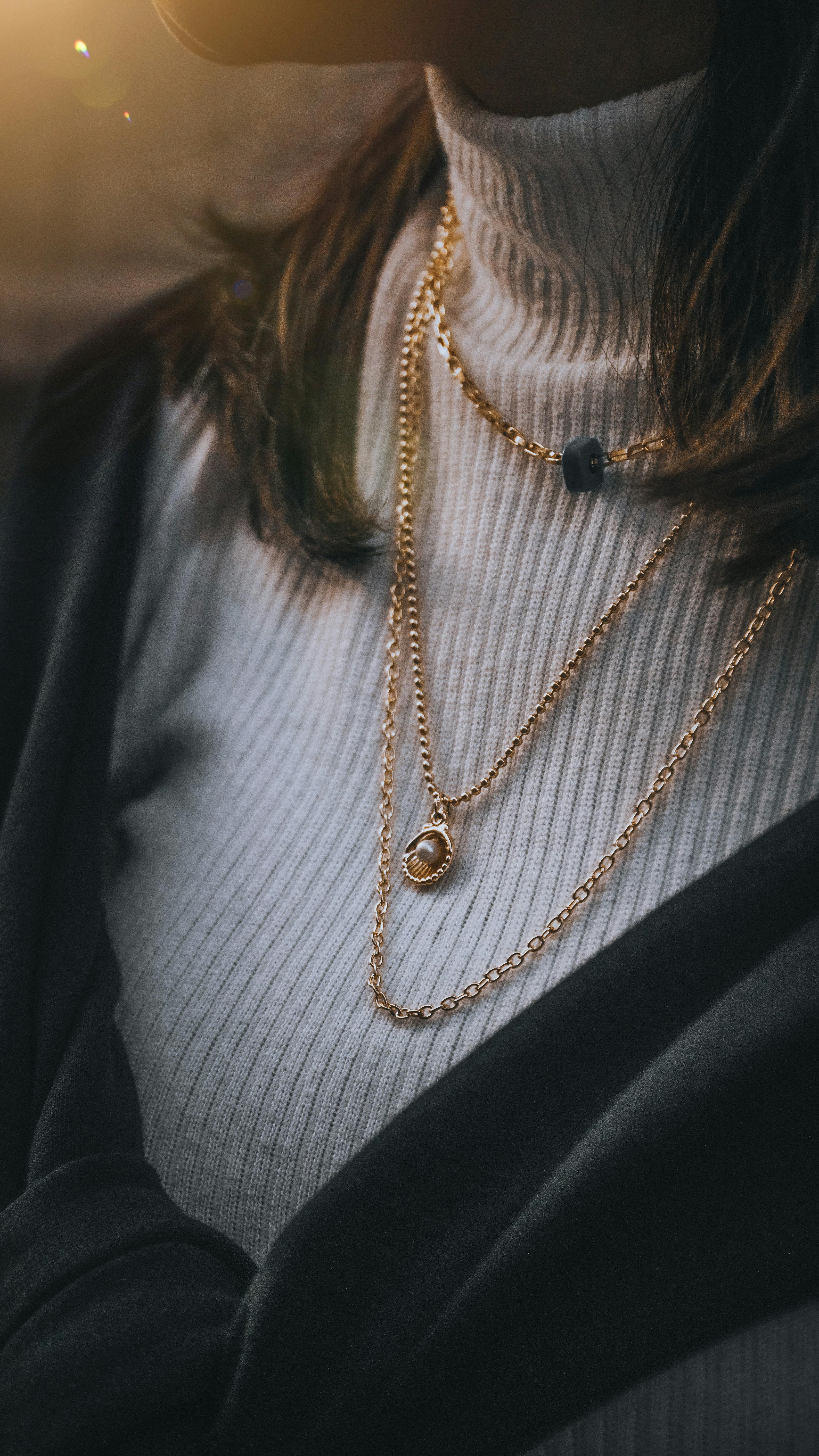
Gemstone Settings: What Holds and What Lets Go
The way a stone is secured in a piece determines its safety and longevity more than the stone itself. There are several common setting styles, and they don't perform equally under daily wear.
Prong Settings
Prongs are small metal claws that grip a stone at its edges, leaving the top and sides exposed to light. They're the dominant setting for diamonds and colored gemstones because they maximize brilliance — but the vulnerability is real. Prongs catch on fabric and sweaters. They can bend with a direct impact. They need to be checked periodically.
What to look for: four prongs hold; six hold better. The prongs should require a tool to bend — if you can flex one with your thumbnail, that's not tight enough. A 14K solid gold zodiac necklace with a natural diamond relies on prong integrity, and in solid 14K, those prongs have enough mass to be both secure and flexible enough for a skilled jeweler to adjust over time. Same principle applies to the Diamond Star Ring in 14K Gold — the quality of the prong setting determines how long that diamond stays exactly where it should.


Bezel Settings
A bezel wraps a continuous rim of metal around the stone's perimeter. It's the most protective setting available — no prongs to catch or bend, the stone entirely enclosed on its sides. The tradeoff is reduced brilliance: less light enters from the edges. For rings and bracelets worn daily, bezels are meaningfully more durable than prong settings. For pieces where the stone's sparkle is the point, prongs win on aesthetics.
Pavé Settings
Pavé holds multiple small stones in closely spaced prongs or beads, creating a surface of continuous sparkle. It's striking — and it requires more attention. Individual stones can loosen with wear, and replacing one in a dense pavé field requires a skilled jeweler with the right tools. Pieces like the Diamond Moon Phase Bar Necklace in 14K Gold are better treated as occasion pieces than daily-wear workhorses — the construction is excellent, but the setting style rewards careful handling.

What to Check Before Buying
In a store: hold the piece under the light and tilt it slowly. Any stone that shifts is already loose — don't accept this as factory normal. Test prongs by pressing lightly with a fingernail. All prongs on a piece should be the same height.
Online: buy from sellers who photograph settings in close-up and describe the setting type in plain terms. A jeweler confident in their construction shows the details, not just the glamour shot.
Chains, Clasps, and the Details Most Buyers Miss
The chain is a mechanical system. It's also where most jewelry fails — not because chains are poorly designed, but because the parts people study least are often where the quality difference is largest.
Chain Construction
Every chain link is a loop of metal closed with solder at one point. That solder joint is the weakest point in the system. A well-made chain has solder joints nearly invisible to the eye, flush with the link on both sides. A poorly made chain has visible lumps at every closure — points of reduced density that will fracture under stress before the surrounding metal does.
Chain thickness is a practical consideration, not just an aesthetic one. A 0.8mm chain works for a lightweight pendant on gentle wear. A 1.5–2mm chain handles both heavier pendants and the friction of daily contact with skin and fabric far better. The chain should be proportionally matched to what it carries — a substantial pendant on a hair-thin chain is an aesthetic and structural mismatch.
Clasp Types
Spring ring clasps — the common small circular mechanisms with a push-in closure — are inexpensive and functional, but the spring wears out over time and they're difficult to close one-handed. Lobster claw clasps are more durable and more user-friendly. Box clasps (often found on bracelets) require two hands but hold very securely with a positive-click mechanism. Magnetic clasps are convenient for lightweight pieces; they are not appropriate load-bearers for heavier chains or pendants.
The clasp is usually where you'll find the hallmark stamp on a necklace or bracelet. It's also where wear shows first on plated pieces — if a clasp on a new piece already shows base metal peeking through the plating, that's diagnostic information about overall quality.
Weight as a Signal
Solid metal is dense and heavy for its apparent size. A hollow piece of the same dimensions feels noticeably lighter. You can't determine metal content by weight alone — but a piece that feels surprisingly light relative to its size is worth investigating before purchase. Ask about construction. Look for stamps. Trust your instinct when something feels off.
How to Choose a Piece Worth Keeping
Technical quality is necessary but not sufficient. A perfectly made piece that doesn't fit your life or your aesthetic sits in a box — which means it served no one. Here's how to connect construction quality to a piece you'll actually reach for.
One concrete example before we get into the principles: our Birthstone Edit is built around the three things this section ultimately argues for — solid 14K gold (not plated, not hollow), a single natural stone (not lab-grown or simulated, where the catalog says natural), and a low-profile bezel setting that protects the stone's girdle from impact. The matching Birthstone Stud Earrings apply the same standard to studs. Both are useful reference points for what a daily-wear-ready piece should actually look like at the construction level.
Match the Metal to the Wear Pattern
Hands take the most abuse: rings are knocked against counters, door frames, and keyboards all day. Wrists take friction. Earrings and necklaces live comparatively easy lives. For anything worn daily — especially rings and bracelets — 14K gold or sterling silver represents the minimum for lasting durability. Higher gold content (18K and above) is more beautiful in tone but softer, better suited for occasional wear. 10K gold is harder still, but its lower gold percentage gives it a noticeably paler, less warm color that some prefer and others don't.
Think in Terms of Repair
Heirloom jewelry gets repaired. A skilled jeweler can tighten prongs, resize rings, replace clasps, re-solder chain links, and polish out scratches. Every one of these repairs requires solid metal — a plated or hollow piece can't be re-soldered without damaging the surface, and resizing a plated ring typically means refinishing the whole piece at significant cost.
If you're buying something to last a generation, solid metal is the only path that actually gets you there. The Identity (Celestial Signatures) collection includes 14K gold pieces in stars, moons, and sun motifs — the kind of symbols that hold personal meaning independent of any particular trend. The Boundaries (Protective Talismans) collection offers sterling silver options at a different price point, still built for permanence.
What “Heirloom Quality” Actually Means
Every jeweler uses this phrase. Here's a useful test: ask what the base metal is, whether the piece is solid or hollow, and what the expected lifespan looks like under regular wear. A jeweler selling genuinely durable pieces answers those questions directly. Evasion — pivoting to the design, the gemstones, or the story — is worth noting.
Transparency about construction is itself a quality signal. AuAlchemy lists metal specifications plainly on each product page — 14K solid gold is identified as such, sterling silver is labeled .925. That directness is what the buying conversation should look like everywhere.
Frequently Asked Questions
Is 14K or 18K gold better for everyday jewelry?
14K for durability. The higher alloy content makes it harder and more scratch-resistant than 18K. For a piece worn daily — especially rings and bracelets — 14K holds up better under real conditions. 18K has a richer, warmer color and higher gold percentage, which makes it the better choice for occasional-wear pieces where appearance is the priority.
How can I tell if a piece is actually real gold?
Look for the karat stamp — 10K, 14K, 18K, or the European equivalents (375, 585, 750). A jeweler can also perform an acid test or XRF fluorescence analysis for definitive verification if you're unsure about a piece you already own. Gold that turns your skin green is base metal, not gold — it's the copper in the base reacting with skin moisture and acidity.
Does sterling silver last as long as gold?
As a solid metal, sterling silver has essentially the same structural longevity as solid gold — it doesn't wear through or degrade. The practical difference is tarnish: silver reacts with sulfur compounds in air and on skin to form a dark surface layer. It polishes off easily with a cloth or silver cleaner, but it requires periodic attention that gold generally doesn't. If you'd rather have low maintenance, opt for gold. If you're comfortable with occasional polishing, sterling silver offers excellent durability at a meaningfully lower price.
What's the actual difference between gold-filled and gold-plated?
Gold-filled (also called rolled gold) contains at least 1/20th of the total piece weight in gold, mechanically bonded to a base metal under heat and pressure. It's regulated and durable — lasting years to decades with care. Gold-plated is a thinner electrochemical deposit, typically measured in microns, that wears through more quickly at friction points. Both will eventually show base metal; gold-filled just takes considerably longer.
Should I avoid hollow gold jewelry entirely?
Not entirely — hollow gold is still real gold at the karat stated, and it lets you wear larger pieces at a lower cost. The limitations matter for how you use it: hollow pieces dent more easily, can't be resized, and are harder to repair cleanly. For earrings or pendants that don't take direct stress, hollow can be a reasonable compromise. For chains, rings, or bracelets that get daily wear, solid is worth the premium.
What three questions should I always ask before buying?
Is this piece solid, hollow, or plated? What is the base metal if it's plated? What does the warranty or repair policy cover? A seller confident in their product's construction answers these directly. Pivoting to the design, the story, or the gemstones when you ask about metal is a signal worth noting.
How do I know if a gemstone setting will hold?
Give the piece a gentle shake near your ear — any rattling means at least one stone is already loose. In person, press gently on each stone with a fingernail to test for movement. A properly set stone shouldn't shift at all. For online purchases, buy from sellers who show close-up photography of the setting and offer some post-purchase assurance on stone security.
The most durable jewelry you'll ever own is a piece that fits your taste, your wear pattern, and your willingness to maintain it — made from materials honest enough to last the distance. Quality doesn't require the highest price point. It requires knowing what you're buying. Every collection worth building starts with that distinction.


