

Guardian Angels in Art, History, and Jewelry: 3,500 Years of Celestial Protection
Few facts about Western religion are as quietly startling as this one: the visual language of winged divine protectors did not begin with the Bible. When archaeologists working in the 1840s excavated the Assyrian palace of Ashurnasirpal II at Nimrud, they found massive stone figures of human-headed, eagle-winged bulls — the lamassu — still standing at the palace gates where they had guarded the threshold for more than two and a half millennia. One pair, carved around 883–859 BCE, is now in the collection of the British Museum. These are not angels in the biblical sense, but they belong to the same deep family of ideas: winged beings, stationed at thresholds, whose purpose is protection. The guardian angel — the specific belief that each person is accompanied through life by an assigned celestial protector — is one of the most cross-cultural and enduring concepts in human religious history. It appears in Zoroastrianism, Judaism, Christianity, and Islam, each tradition adding its own theological texture to an impulse that predates all of them. It has inspired some of the most beloved paintings in the Western canon, and for centuries it has been worn close to the skin as guardian angel jewelry: a material expression of an immaterial hope. This piece traces that history from ancient Persia to the Renaissance studios of Fra Angelico and Raphael, and into the sterling silver pieces people choose to wear today.
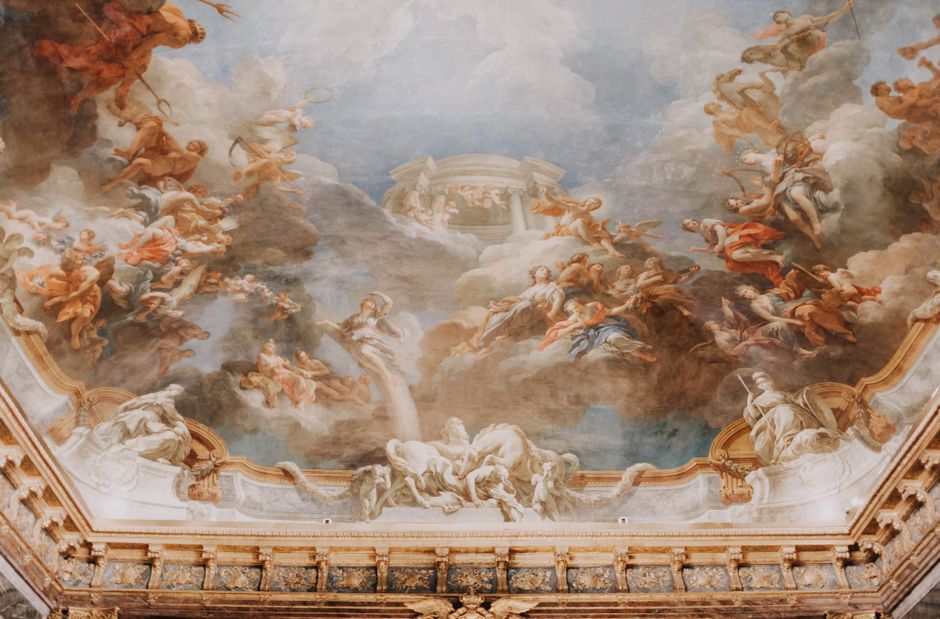
Before the Bible: The Ancient Roots of Angel Iconography
Zoroastrianism and the First Guardian Spirits
The oldest formal theology of guardian spirits belongs not to Judaism or Christianity but to Zoroastrianism, the ancient Iranian faith attributed to the prophet Zarathustra, whose dates scholars place variously between 1500 and 600 BCE. The Avesta, Zoroastrianism's sacred scripture, describes six Amesha Spentas — Bounteous Immortals — divine emanations of Ahura Mazda who each oversee a specific aspect of creation and accompany and protect individual souls. According to the Encyclopaedia Iranica, each Amesha Spenta functions simultaneously as a cosmic principle and a personal guardian, a structural template that would reappear centuries later in the angelologies of all three Abrahamic faiths. Scholars of comparative religion widely accept that Zoroastrian theology influenced Jewish thought during the Babylonian exile (586–538 BCE), when Jewish intellectuals encountered Persian cosmology directly at the court of Cyrus the Great.
According to the Stanford Encyclopedia of Philosophy's entry on Zoroastrianism, Zoroastrian divine beings were not typically rendered in figurative art — but the Mesopotamian and Assyrian traditions surrounding them were rich with winged divine figures, and these images became a shared visual vocabulary that later traditions would inherit and transform.
Mesopotamia, the Lamassu, and the Hebrew Synthesis
The Assyrian lamassu — colossal human-headed, eagle-winged bulls or lions carved to flank the gates of palaces — performed a guardian function that later angel iconography would echo directly. They stood at thresholds, warding off evil and marking the boundary between sacred and profane space. The pair from the palace of Ashurnasirpal II at Nimrud (c. 883–859 BCE), displayed in the British Museum, demonstrates the ambition of this tradition: each figure stands more than ten feet tall. Wings, in this visual language, marked a being as inhabiting both the earthly and the celestial realms simultaneously.
Jewish scripture inherited and transformed this vocabulary. The Hebrew word for angel, mal'akh, means simply “messenger” — a functional description rather than a species. The beings who appear to Abraham, Hagar, and Jacob in Genesis are not consistently described as winged; it is the higher orders of divine attendants — the seraphim of Isaiah 6:2 and the cherubim of Ezekiel — who bear wings explicitly. The concept of a personal guardian angel emerges more explicitly in later texts. Psalm 91:11 — “For he will command his angels concerning you to guard you in all your ways” — became one of the most-cited scriptural foundations for the guardian angel doctrine, invoked by theologians for nearly two thousand years. The deuterocanonical Book of Tobit (c. 200 BCE), discussed in the Catholic Encyclopedia's entry on angels, gives a name and a narrative to one such guardian: Raphael, who accompanies the young Tobias on a dangerous journey disguised as a human companion, revealing his celestial nature only when the mission is complete.
The Theology of Guardian Angels: From the Church Fathers to Thomas Aquinas
Origen, Basil, and the Development of Personal Guardianship
The formal doctrine that every human being is assigned a specific guardian angel developed gradually through the first centuries of Christian theology. Origen of Alexandria (c. 184–253 CE) argued in De Principiis that every soul receives an angelic companion at birth — a good angel whose task is to guide the soul toward virtue and whose presence constitutes a continuous invitation toward the good. Origen drew on Jewish tradition and Platonic philosophy, understanding angels as divine intermediaries who mediate between God's perfection and the imperfect material world. Basil the Great (330–379 CE) extended this idea, writing that every faithful person receives an angel at baptism who stays close as “a kind companion and shepherd” throughout life.
The Catholic Encyclopedia's detailed entry on guardian angels traces this theological development through the patristic period, noting that while popular belief in personal guardian angels ran well ahead of official Church definition, the structural idea was never seriously contested — only its precise theological articulation was debated.
Aquinas, the Universal Church, and October 2
It was Thomas Aquinas (1225–1274) who gave the guardian angel doctrine its most rigorous and enduring formulation. In the Summa Theologica, Aquinas argued that guardian angels are assigned not only to individuals but to nations, cities, and communities — a cosmic administrative structure in which the care of human affairs is delegated through a hierarchy of angelic offices. He further argued that an angel's guardianship does not end at death: the angel accompanies the soul through the particular judgment. This systematic vision proved enormously generative for later theology, popular devotion, and art.
By the sixteenth century, the Feast of the Guardian Angels had been established in Spain and Portugal and was spreading through Catholic Europe. Pope Clement X extended the feast to the universal Church in 1670, formally endorsing as a liturgical event what had been a matter of popular devotion for centuries. The feast is now observed on October 2 in the Roman Catholic calendar, and its liturgical texts draw directly on Psalm 91, the Book of Tobit, and the writings of Aquinas.
Islamic Angelology: The Hafaza and the Recording Angels
Islam's angel tradition, rooted in the Quran revealed beginning around 610 CE, shares the Abrahamic inheritance while developing its own distinctive theology. The Quran names four archangels — Jibril (Gabriel), Mika'il (Michael), Israfil, and Azra'il — and describes a category of angels called the hafaza, or guardian angels, whose protective function is explicitly stated. Surah Al-An'am (6:61) states: “He is the subjugator over His servants, and He sends over you guardian angels until, when death comes to one of you, Our messengers take him, and they do not fail in their duties.”
Two recording angels accompany every person throughout life — Raqib on the right shoulder, Atid on the left — documenting every good and evil act in a ledger that will be presented on the Day of Judgment. This notion of angelic witness adds a moral dimension to the protective concept: these beings are not merely shields but witnesses to a life lived. For many Muslim believers, awareness of this continuous divine attention is itself a form of spiritual discipline.
Angels in Art: From Byzantine Gold Leaf to Renaissance Oil Paint
Byzantine Icons and the Grammar of Wings
The Byzantine tradition, which flourished from roughly 330 CE through the fall of Constantinople in 1453, established the first settled visual vocabulary for angels in Christian art. Byzantine artists derived their angel forms from Roman Victory figures — the winged personifications of triumph familiar from coins and triumphal arches — and adapted them into a sacred register. Wings became the signature of divine mobility: only beings who traveled between earth and heaven were depicted with them. The halos of Byzantine angels were gilded to signal their participation in divine light rather than material existence.
The Archangel Michael was among the most frequently depicted — commander of the heavenly host, shown with sword, lance, or orb, his wings fully unfurled. As the Metropolitan Museum of Art's Heilbrunn Timeline of Art History notes, Byzantine icons were understood not merely as representations but as windows onto a spiritual reality: believers venerated them through prayer, incense, and touch, the gilded surface functioning as a threshold between the visible and invisible worlds. This understanding — that the image participates in the reality it depicts — shaped how every later tradition of devotional jewelry would understand the angel medal.
Fra Angelico and the Intimate Angel
No artist in Western history brought more sustained meditative attention to angels than Guido di Pietro (c. 1395–1455), known to history as Fra Angelico — the Angelic Brother. A Dominican friar at the Convent of San Marco in Florence, Fra Angelico painted approximately fifty frescoes directly onto the walls of the monks' individual cells between approximately 1438 and 1445, under the patronage of Cosimo de' Medici. Each fresco was designed to accompany the monk who lived in that cell in his private contemplation. Fra Angelico was beatified by Pope John Paul II in 1982 and is now considered the patron of Catholic artists; his works are studied at the Metropolitan Museum of Art, which holds significant examples of his panel paintings.
His Annunciation fresco at the top of the dormitory staircase at San Marco (c. 1438–1445) is perhaps the most spiritually concentrated angel image in Western art. Gabriel kneels before Mary with wings of extraordinary layered color — gradients of rose, gold, and amber — his posture one of reverence rather than command. The angel does not tower; he bows. Art historians have consistently noted that Fra Angelico's angels communicate interiority: they appear to feel what they witness. The National Gallery of Art in Washington holds another of his major Annunciation panels (c. 1426), in which Gabriel wears a cloak of deep crimson with wings edged in peacock feather gradients — the peacock being a traditional symbol of immortality and divine watchfulness. Fra Angelico's signal achievement was making the celestial feel intimate: his angels attend to human moments with a gravity and care that feels less like supervision and more like accompaniment.
Raphael and the Most Reproduced Angels in the World
Raphael Sanzio (1483–1520) gave Western culture its most recognizable angel images and, in doing so, fundamentally transformed how the guardian angel concept was popularly understood. His Sistine Madonna (1512), painted for the church of San Sisto in Piacenza and now in the Gemäldegalerie Alte Meister in Dresden, depicts two chubby, pensive putti resting their chins on their hands at the bottom of the canvas, gazing upward toward the enthroned Virgin. These two figures — extracted from the larger composition and reproduced on greeting cards, institutional crests, and porcelain since the eighteenth century — became the dominant popular image of the angelic in the modern world.
They represent a significant departure from the martial archangels of Byzantium and the luminous messengers of Fra Angelico. Raphael's putti are companions: small, curious, observant, not quite terrestrial. Their influence on guardian angel imagery is incalculable; the child-like watchfulness they embody persists in popular representations of the guardian concept to this day. Raphael also painted Saint Michael Overwhelming the Demon (1518), now in the Louvre, commissioned by Pope Leo X as a diplomatic gift for King Francis I of France. This Michael — radiant, armored, unhurried — drives a writhing figure downward with a lance, representing the other pole of the guardian angel concept: not the tender companion but the cosmic protector capable of decisive intervention in the conflict between good and evil.
Guardian Angel Medals and the History of Devotional Jewelry
The Religious Medal as Portable Icon
The religious medal as a distinct devotional object emerged in 15th- and 16th-century Europe, partly inspired by the ancient Roman practice of wearing protective amulets bearing images of gods or emperors. Renaissance craftsmen began producing small, portable devotional images in silver and gold — objects that could be worn on a cord, hung on a bedpost, or carried in a pocket, extending the protective and meditative power of the sacred image into daily life. The Smithsonian's National Museum of American History holds examples of 18th- and 19th-century devotional medals that demonstrate the persistence of this tradition across centuries and continents.
The Miraculous Medal — struck in 1832 following reported Marian apparitions to Catherine Labouré in Paris — dramatically accelerated popular interest in devotional jewelry. Within a decade of its first striking, more than ten million Miraculous Medals had been distributed across the Catholic world. The guardian angel medal followed a similar trajectory, becoming a standard gift for baptisms, first communions, and confirmations across Catholic communities in Europe and the Americas. By the early twentieth century, the classic guardian angel medal design — a winged adult figure with arms extended protectively over a smaller figure — had become one of the most widely recognized devotional images in the world. The Catholic Encyclopedia notes the theological tradition, rooted in Aquinas, of wearing sacred images as a form of ongoing prayer — the medal not as a magical object but as a material prompt for an interior disposition.
Silver's role in this tradition is not incidental. As the Gemological Institute of America (GIA) documents in its resources on precious metals, silver has been used for ritual and ornamental purposes since at least 3000 BCE. Its relative accessibility made it the democratic choice for devotional objects worn by ordinary people rather than royalty: gold was for altarpieces and royal commissions; silver was for the medal worn by a fisherman's daughter or a factory worker's son.
The Guardian Angel Medal Today
The classic guardian angel medal format — a coin-shaped disc, 18mm in diameter, bearing a relief image of a winged figure with arms extended over a smaller figure — has remained essentially unchanged for more than a century, because the form genuinely works. It is intimate enough to wear close to the skin, substantial enough to be felt when the wearer reaches for it. AuAlchemy's Sterling Silver 18mm Guardian Angel Medal Necklace follows this traditional form in .925 sterling silver, its surface detailed enough to reward close attention and spare enough to be worn through the ordinary days that constitute most of a life.

The medal sits within AuAlchemy's Protective Talismans collection, which gathers objects designed to be worn as intentional companions rather than incidental accessories. The Celestial Signatures collection extends this vocabulary into astronomical and elemental forms, while the Continuity collection focuses on pieces designed for a lifetime of wear — objects that accumulate meaning through use rather than display it through novelty.
How to Choose, Style, and Care for Guardian Angel Jewelry
Choosing a Piece That Fits Your Practice
The first question to ask when choosing a guardian angel necklace or medal is not aesthetic but intentional: what does this piece mean to you, and what do you want it to do? For someone rooted in Catholic devotional practice, the traditional medal format — round, flat, bearing the classic guardian angel image — connects most directly to a two-century tradition of worn prayer. For someone drawn to the broader human history of angelic protection, or to the art history behind it, the angel pendant in sculptural form may feel more resonant. Neither reading is wrong; the piece works best when it aligns with something the wearer genuinely holds.
Consider how the piece will be worn alongside other jewelry. A guardian angel medal on a 16-inch chain pairs naturally with an inscription piece on a longer chain or on the hand — two expressions of the same orientation, in different formats. The The Inscription — Sterling Silver Ring works for someone who wants the reminder on their hand rather than at their chest, a different relationship to the body and to the practice. The medal stays at the collar; the ring stays in the field of view.

Layering and Daily Wear
Guardian angel jewelry layers most naturally with pieces from AuAlchemy's Ethereal Elements collection, which draws on elemental and celestial symbolism in forms that complement rather than compete with devotional pieces. The practical principle for layering is both visual and thematic: keep metals consistent — sterling silver with sterling silver reads as intentional — and allow each piece visual breathing room by varying chain lengths by at least two inches.
An 18mm guardian angel medal on an 18-inch chain, paired with a faith, hope, love necklace on a 20-inch chain, creates a layered arrangement in which both pieces remain legible without competing for attention. For everyday wear, neither requires explanation or announcement. The devotional tradition of wearing a guardian angel medal inside the collar — against the skin, invisible to others — has roots in the same sensibility that produced the Catholic scapular: the idea that the most meaningful protective object is private, a conversation between the wearer and the one they believe is watching, not a display for external observers.
Caring for Sterling Silver
Sterling silver — 92.5% pure silver alloyed with copper or other metals for durability — tarnishes over time through exposure to air, moisture, and sulfur compounds. The GIA recommends storing silver pieces in airtight bags or cloth pouches between wearings and cleaning with a soft silver polishing cloth rather than abrasive chemical cleaners. Avoid exposing guardian angel medals and pendants to chlorinated water, perfumes applied directly to the surface, and lotions, all of which accelerate tarnishing.
Tarnish on sterling silver is entirely reversible — it is a surface oxidation reaction, not structural damage — and a few minutes with a polishing cloth will restore the original brightness. Pieces worn daily often tarnish more slowly than pieces stored in a drawer, because the gentle friction of skin and clothing keeps the surface active. A guardian angel medal worn every day develops its own particular luster over time: not the factory brightness of a new piece, but something that has been handled, carried, worn through ordinary mornings. There is a long tradition of viewing the wear on a devotional object not as degradation but as evidence — proof that it has been present for the life it was meant to accompany.
Frequently Asked Questions
What is the guardian angel meaning in jewelry?
Guardian angel jewelry draws on a tradition spanning at least two millennia, in which a wearable image of a winged protector serves as a material reminder of an immaterial belief: that something watchful accompanies us through difficulty. The angel medal meaning is both theologically specific — invoking the Christian doctrine of an assigned celestial guardian, articulated by Aquinas and codified in centuries of Catholic practice — and broadly human: the wish to be accompanied, to be seen, to be protected. Wearing a guardian angel necklace is an act of intention more than superstition, a choice to carry a question about divine care close to the body throughout the ordinary day.
Is guardian angel jewelry specific to Christianity?
The classic guardian angel medal is most closely associated with Catholic devotional practice and emerged from a specifically Christian theological tradition. But the underlying concept — a divine being assigned to protect and accompany an individual human soul — appears in Zoroastrianism (the Amesha Spentas), Judaism (Raphael and Tobias, Psalm 91), and Islam (the hafaza and the recording angels). Many wearers find their own meaning in angel necklaces and pendants without adopting any specific theology, reading the winged figure as a symbol of the broader human need for protection and presence that cuts across doctrinal lines.
When did guardian angel medals first become popular as devotional objects?
Religious medals as a devotional practice date to 15th- and 16th-century Europe, with roots in ancient Roman amulet traditions. Guardian angel medals became widespread gifts for Catholic sacramental occasions — baptism, first communion, confirmation — in the nineteenth century, riding a wave of popular devotional culture that included the Miraculous Medal (1832) and associated renewal movements. By the early twentieth century, the guardian angel medal was a standard gift across Catholic communities in Europe, Latin America, and North America, and its basic design has remained largely unchanged since that period.
What is the difference between an angel medal and an angel pendant?
An angel medal is typically a flat, coin-shaped disc bearing a relief image of an angel — classically in the guardian angel pose, with wings extended and arms protectively framing a smaller figure. It belongs explicitly to the religious medal tradition and carries the devotional weight of that lineage. An angel pendant may take any form: a three-dimensional sculptural figure, a silhouette, an abstracted shape. Medals tend to be chosen for their devotional resonance; pendants are chosen as often for aesthetic as for symbolic reasons, though the two categories overlap considerably for most wearers and the distinction is less important than the intention behind the choice.
How should I wear a guardian angel necklace?
There is no single correct way, and the history of devotional jewelry includes both very private and very public modes of wear. The Catholic tradition of wearing a medal under clothing, against the skin, treats the object as intimate prayer rather than public statement. Other traditions favor open display, understanding visible religious jewelry as a form of witness or invitation to conversation. Practically, an 18mm medal sits well on an 18–20 inch chain for most body types, keeping the piece near the collarbone and visible in most necklines. Layering with a longer piece at 20–22 inches allows both to be seen without competing. What matters most is that the piece is worn with intention: chosen deliberately, put on with some awareness of why it is there, and carried through the day as something more than decoration.


